Empire of Silence by Christopher Ruocchio and A Memory Called Empire by Arkady Martine match Dune on dynastic politics and far-future intrigue. At ReadNext, we check each title against Open Library’s catalog. Both novels thrust an aristocratic thinker into an unforgiving imperial court where etiquette conceals deadly schemes. If planetary ecology and manufactured prophecy gripped you on Arrakis, Dan Simmons delivers that religious tension across the pilgrimage in Hyperion.
These novels split into three distinct storytelling threads: imperial politics, ruthless ecology, and constructed religion. Readers who finished Frank Herbert’s epic will find novels that mirror its dense themes without copying its plot.
The Best Books Like Dune, Grouped by Shared Themes
Feuding empires and court intrigue
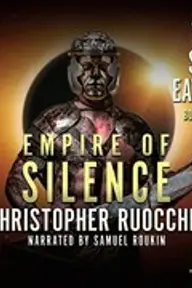
1. Empire of Silence
Christopher Ruocchio
Christopher Ruocchio builds a feudal galactic empire bound by rigid aristocratic customs and high drama. Hadrian Marlowe flees family expectations, only to get dragged into courtly maneuvers and an interstellar conflict against an inscrutable alien species. Readers who wanted more aristocratic swordplay, court philosophy, and slow character development will feel at home. It contains scenes of graphic violence, and people seeking brisk, light action should skip Hadrian’s deliberate memoir.
Find it on Amazon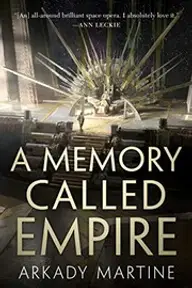
2. A Memory Called Empire
Arkady Martine
Arkady Martine crafts a story of cultural absorption and political vulnerability inside the sprawling Teixcalaanli Empire. Ambassador Mahit Dzmare arrives at the imperial capital to find her predecessor dead and her secret neurological safeguard compromised. The novel shares Frank Herbert’s preoccupation with poetry, bureaucracy, language, and lethal court decorum. Readers who prefer large desert battles over diplomatic conversations in palace corridors should look elsewhere.
Find it on Amazon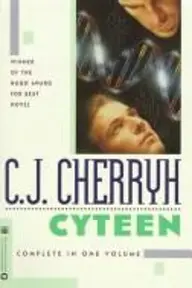
3. Cyteen
C. J. Cherryh
C. J. Cherryh examines statecraft, behavioral modification, and cloning through cold corporate governance. When a brilliant and ruthless scientist dies under mysterious circumstances, her laboratory creates a genetic clone to duplicate her political power. The heavy psychological manipulation and clinical worldbuilding equal the grim schemes of the Bene Gesserit. Skip this pick if you want heroic space opera. Content includes depictions of psychological abuse and non-consensual relationships.
Find it on Amazon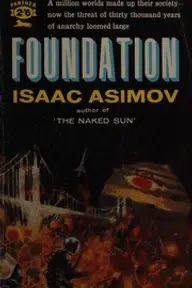
4. Foundation
Isaac Asimov
Isaac Asimov charts the fall of a galactic empire through mathematics, sociology, and generational statecraft. Hari Seldon foresees inevitable collapse and plants a remote colony to preserve human knowledge across millennia of darkness. Like Dune, the narrative views history as the product of large social currents over individual choices. Action fans might find the conversational problem-solving dry, but readers drawn to imperial collapse will appreciate the grand scale.
Find it on AmazonHarsh ecologies and planetary survival
5. The Left Hand of Darkness
Ursula K. Le Guin
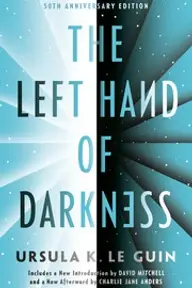
Ursula K. Le Guin sends a human envoy to the frozen world of Gethen, where physiological uniqueness and subtle palace rivalries shape global society. The frozen environment operates as an active character, demanding survival skills reminiscent of the deep desert on Arrakis. Genly Ai must handle quiet factional politics between two rival nations. Those seeking explosive military hardware will find the measured pacing too quiet.
Find it on Amazon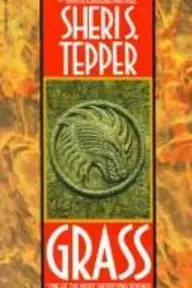
6. Grass
Sheri S. Tepper
Sheri S. Tepper imagines an alien planet covered in vast expanses of multicolored grass, where human aristocrats indulge in ritual hunts while an interstellar plague threatens humanity. Marjorie Westriding investigates the local ecology and uncovers terrible secrets about the planet’s native life cycle. The book delivers the biological mystery and strange environmental interactions that Herbert championed. Be aware that the story contains scenes of graphic violence.
Find it on Amazon
7. Helliconia Spring
Brian W. Aldiss
Brian W. Aldiss tracks an entire world whose centuries-long seasons dictate the biological and cultural survival of civilizations. As the bitter winter gives way to spring, humanity fights for territory against rival indigenous species adapted to the cold. The scope matches Frank Herbert’s ecological focus on Arrakis, showing how climate shapes religion, anatomy, and social systems. Pass on this novel if you require a single central protagonist.
Find it on Amazon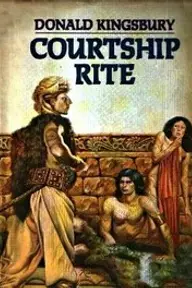
8. Courtship Rite
Donald Kingsbury
Donald Kingsbury builds a brutal society on an arid planet devoid of edible animal life, forcing human clans to develop strict biochemical controls and institutionalized cannibalism. Survival dictates theology, mating customs, and technological progress across harsh desert wastes. The focus on resource scarcity echoes the water discipline of the Fremen. The intense material includes graphic violence, cannibalism, and sexual content, making it unsuitable for younger readers.
Find it on AmazonManufactured gods and messianic fates
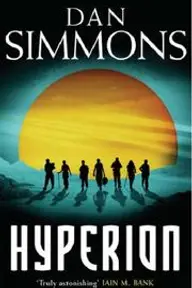
9. Hyperion
Dan Simmons
Dan Simmons follows a pilgrimage across a fracturing interstellar Hegemony threatened by a time-bending monster. Seven travelers head to the remote world of Hyperion, sharing personal histories that uncover galactic politics, artificial intelligence agendas, and religious dread. The book mirrors Dune through its philosophical weight and fusion of faith with technology. The narrative contains body horror and graphic violence, so sensitive readers should proceed with caution.
Find it on Amazon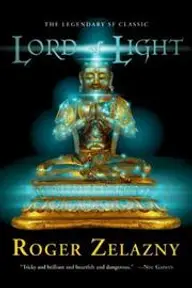
10. Lord of Light
Roger Zelazny
Roger Zelazny depicts a colony ship crew that uses advanced technology to reincarnate through cloned bodies and rule over their descendants as Hindu deities. One rebel leader adopts Buddhist teachings to wage technological and ideological war against the synthetic pantheon. The deconstruction of synthetic religion and divine authority aligns directly with Paul Atreides and the Missionaria Protectiva. The nonlinear mythic style demands close attention.
Find it on Amazon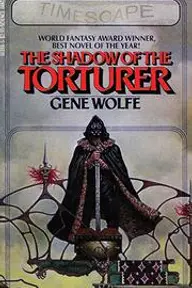
11. The Shadow of the Torturer
Gene Wolfe
Gene Wolfe chronicles the exile of Severian, a young journeyman torturer wandering a dying Earth under a fading sun. The text is saturated with religious symbolism, archaic ceremony, and deceptive narration, demanding active interpretation from the reader. Severian’s path mirrors Paul’s destiny as a messianic figure shaped by ancient forces. The book features torture and graphic violence. Skip it if you dislike unreliable narrators.
Find it on Amazon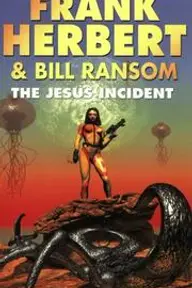
12. The Jesus Incident
Frank Herbert and Bill Ransom
Frank Herbert and Bill Ransom explore artificial divinity and ecological warfare on the water planet Pandora. The sentient computer controlling a colony ship demands that its human crew discover how to worship it properly, while the deadly oceans below punish human intrusion. Readers get Herbert’s unmistakable ideas on communication, theology, and biological interdependence. The writing features sudden violence and challenging ethical debates throughout.
Find it on AmazonThe Core Narrative Elements of Dune
Frank Herbert built a fictional universe that avoids ordinary science fiction tropes by grounding futuristic technology in human biology and sociological development. Three distinct storytelling elements define that world, and these books match those specific threads.
Pick the element that drew you in, then start with its group.
- Galactic Feudalism and Court Plots: Noble houses, assassination attempts, and complex imperial rules define the story’s tension. Picks like Empire of Silence and A Memory Called Empire capture this web of political intrigue.
- Ruthless Planetary Ecology: Arrakis is an active antagonist that molds its people through harsh survival rules. Novels like The Left Hand of Darkness and Helliconia Spring treat their settings with the same biological depth.
- Constructed Religions and Prescience: The Bene Gesserit plant prophecies for political control, creating a manufactured messiah. Hyperion and Lord of Light explore how faith can be engineered to direct human civilization.
How to Pick by What You Loved Most
If you want dense political maneuvers with aristocratic houses and tactical treachery, read Empire of Silence or A Memory Called Empire first. Both titles showcase intelligent protagonists who must survive in capitals where a misplaced sentence can invite an assassination attempt.
Readers who loved the environmental worldbuilding and resource scarcity of Arrakis should open Helliconia Spring or Grass. These stories treat ecosystems as living systems that force human cultures to change their morals, diets, and customs simply to stay alive.
If the mystical elements, engineered messiahs, and religious statecraft fascinated you, select Hyperion or Lord of Light. Both novels examine characters caught in theological machinery created by advanced technology.
Content Warnings and Age Guidance
Frank Herbert wrote for an adult audience, filling his universe with sexual politics, ritual combat, drug-induced visions, and mass casualties. Most matching titles share that adult orientation, featuring complex ethical questions and mature situations.
Courtship Rite contains depictions of institutional cannibalism and intense sexual customs that will disturb many readers. Cyteen explores psychological abuse and non-consensual sexual relationships, while The Shadow of the Torturer details state-sanctioned torture and graphic violence.
For younger teens seeking science fiction adventure without extreme graphic violence, explore Books Like The Hunger Games. Readers who want faster pacing, school rivalries, and academy battles should turn to Books Like Red Rising instead.
Who Should Skip These Books
Readers who want fast, breezy plots with immediate answers will struggle with these books. These novels demand patience, featuring extensive worldbuilding, invented dialects, philosophical conversations, and slow political build-ups.
If you dislike dense prose, philosophical monologues, and complex royal lineages, step away from these novels. You will find better pacing and high-energy romance in Books Like Fourth Wing.
Our assessment would shift if you want military science fiction focused strictly on fleet tactics and spaceship dogfights. In that situation, space battle series like those in Books Like the One You Just Finished fit your goal much better than these political epics.
- Skip these titles if you want rapid action without long descriptions of government structures and courtly manners.
- Skip these titles if grim social systems, severe resource deprivation, and moral ambiguity make reading stressful.
- Take our What Should I Read Quiz if you want a custom recommendation tailored to your favorite genres.