Wolf Hall, Pachinko, and All the Light We Cannot See show how different historical fiction books can feel while doing the same core job. Hilary Mantel tracks political survival inside a Tudor royal court, Min Jin Lee traces four generations of an immigrant family across twentieth-century Japan, and Anthony Doerr follows two young lives caught on opposing sides of World War II. At ReadNext, we read historical fiction for how well a book balances recorded historical facts with the private feelings of characters who had to live through them.
The selection groups fourteen widely read historical novels into four clear reading moods: court politics, multi-generational family sagas, wartime survival, and intimate domestic mysteries. Every entry notes the historical backdrop, the central conflict, who should pick it up, and the specific violence or trauma to expect before you commit.
Whether you want a detailed political puzzle or a fast-paced personal drama for an upcoming discussion, these titles represent the strongest entry points across different historical eras.
Historical fiction books, grouped by setting and focus
Power, Politics & Royal Courts
1. Wolf Hall
Hilary Mantel
Hilary Mantel rebuilds the court of King Henry VIII through Thomas Cromwell, a blacksmith’s son who becomes the king’s most capable political fixer. The story is built on the real history of Thomas Cromwell, with his inner life invented. Mantel writes in an immediate, close third-person present tense that places you directly inside political negotiations. It demands careful reading because Cromwell is often referred to simply as ‘he’. Readers wanting rapid action or conventional dialogue will find it slow, and it includes political executions, domestic violence, and period brutality.
Find it on Amazon2. The Pillars of the Earth
Ken Follett
Ken Follett shifts the focus of historical drama from royal palaces to the working lives of stonemasons, monks, and regional nobles. Set in the invented town of Kingsbridge around the multi-decade construction of a cathedral, the narrative runs on clear conflicts between ambitious builders and corrupt authorities. The characters divide cleanly into heroes and villains, which keeps the lengthy plot moving quickly. Skip this book if you prefer understated literary prose or nuanced grey morality. It features graphic medieval warfare, torture, and multiple scenes of sexual assault.
Find it on Amazon3. I, Claudius
Robert Graves
Robert Graves frames this novel as a secret autobiography written by the fourth Roman emperor, who survived deadly imperial purges by exaggerating his physical infirmities. Claudius observes four decades of betrayal, paranoia, and sudden assassinations inside the Julio-Claudian dynasty with cynical, dry detachment. Graves treats classical history as an insider political memoir rather than grand mythology. Readers who dislike extensive lists of Roman family genealogies or dry narrative pacing may find it academic. Content includes political murder, poisonings, state executions, and references to incest.
Find it on AmazonArt, Loss & Intimate Mysteries
4. The Miniaturist
Jessie Burton
Jessie Burton sets this novel in seventeenth-century Amsterdam, where eighteen-year-old Nella Oortman arrives to marry a wealthy merchant. Instead of marital intimacy, she receives a cabinet-sized wedding gift and soon receives tiny replicas of her household from a mysterious miniaturist that mirror real family secrets. Burton emphasizes the restrictive social codes of the Dutch Golden Age. Skip this pick if you want large-scale action or a fully explained mystery. Content warnings include systemic racism, religious persecution, the persecution of a gay character, and death during childbirth.
Find it on AmazonFamily Sagas Across Generations
5. Pachinko
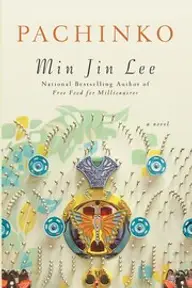
Min Jin Lee
Min Jin Lee tracks four generations of an ethnic Korean family living in Japan, beginning with an unplanned pregnancy in a small fishing village in the early 1900s. The narrative moves through colonial occupation, World War II, and corporate boardrooms, documenting how systemic discrimination shapes everyday financial survival. It is easier to follow than the medieval and Roman court novels, but it deals directly with racism, suicide, sexual content, and terminal illness. Skip it if you need a tight, single-protagonist plot.
Find it on Amazon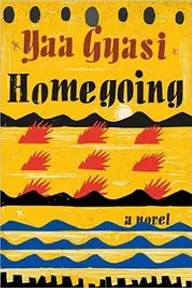
6. Homegoing
Yaa Gyasi
Yaa Gyasi tells the story of two Ghanaian half-sisters born in the eighteenth century who never meet: one marries an English slave-fort officer, while the other is captured and sold into American slavery. Each subsequent chapter shifts forward a generation, following their descendants through colonization in Ghana and the plantation South, the Civil War, and the twentieth century. The structure works like fourteen connected short stories. Skip it if you prefer following one consistent cast across an entire book. Contains depictions of chattel slavery, sexual assault, and institutional racism.
Find it on Amazon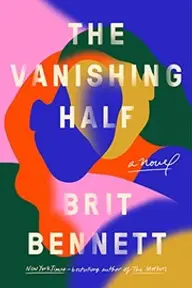
7. The Vanishing Half
Brit Bennett
Brit Bennett traces the lives of twin sisters who grow up in a small, color-conscious Black community in Louisiana before fleeing at age sixteen. As adults, one sister chooses to live and pass as white, hiding her past from her husband and daughter, while the other returns to their hometown with her dark-skinned child. The plot is easier to follow than sprawling dynastic epics, moving between the sisters and their daughters from the 1950s to the 1990s. It addresses racism, domestic violence, and transphobia directly.
Find it on AmazonLives Entangled by War
8. All the Light We Cannot See
Anthony Doerr
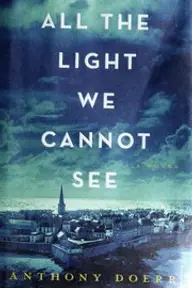
Anthony Doerr alternates between Marie-Laure, a blind French girl fleeing occupied Paris with a valuable museum jewel, and Werner, a German orphan whose skill with shortwave radio gets him recruited by the military. Their paths cross in the walled city of Saint-Malo during the Allied bombardments of 1944. Doerr uses very short chapters and present-tense scenes to build momentum. Readers who dislike non-linear timelines or alternating perspectives might find the switching disruptive. Content includes wartime shelling, civilian casualties, and an implied sexual assault.
Find it on Amazon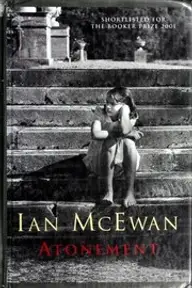
9. Atonement
Ian McEwan
Ian McEwan splits his novel across three distinct periods, beginning on a hot summer day in 1935 when thirteen-year-old Briony Tallis misinterprets an adult encounter and makes a devastating accusation. The second half follows the resulting fallout through the 1940 British army retreat to Dunkirk and wartime hospital scenes in London. McEwan focuses on the long-term burden of guilt and how narrative memory changes over time. Skip it if you want a conventional love story with clean closure. Content includes wartime casualties, a false accusation of rape, and an actual rape.
Find it on Amazon10. The English Patient
Michael Ondaatje
Michael Ondaatje gathers four traumatized survivors in a damaged, mined Italian villa during the final months of World War II: a nameless, severely burned burn patient, his young Canadian nurse, a grieving thief turned intelligence operative, and a Sikh sapper clearing unexploded bombs. The story unspools through layered fragments, memories of pre-war desert expeditions, and conversations. It prioritizes mood and sensory observation over a linear mystery. Skip it if you need a straightforward, fast-moving plot. Content includes graphic burn injuries, war trauma, and morphine dependence.
Find it on Amazon11. The Nightingale
Kristin Hannah
Kristin Hannah follows two estranged French sisters surviving the German occupation of France from opposite perspectives. One sister remains in their rural village home, enduring hunger and hiding Jewish children while a German officer is billeted in her home; the other joins an underground resistance network helping shot-down Allied airmen escape over the Pyrenees mountains. The novel emphasizes the emotional cost of wartime decisions. If you want further reading along these lines, explore books like The Nightingale. Content includes sexual assault, torture, execution, and concentration camp scenes.
Find it on AmazonArt, Loss & Intimate Mysteries
12. Hamnet
Maggie O'Farrell
Maggie O’Farrell centers this novel on Agnes, an intuitive herbalist living on the edges of Stratford-upon-Avon, while her playwright husband works in the London playhouses. When the bubonic plague infects their household in 1596, the family faces the sudden loss of their eleven-year-old son, an event that later informs his father’s most famous tragedy. O’Farrell writes with sensory detail focused on early modern domestic work and herbal remedies. It is an exploration of parental bereavement, featuring the graphic physical progression of the plague and intense familial grief.
Find it on Amazon13. Alias Grace
Margaret Atwood
Margaret Atwood examines the ambiguous case of a young servant, Grace Marks, convicted of a double murder in 1840s Ontario. A fictional American doctor interviews Grace in an asylum years later to determine whether she was a scheming accomplice, an innocent pawn, or mentally unwell during the killings. Atwood weaves real historical transcripts, poems, and quilt patterns into the text to question the reliability of memory and female testimony. Readers who want an absolute, tidy resolution will find the open ending frustrating. Content includes murder, sexual violence, a fatal botched abortion, and asylum mistreatment.
Find it on Amazon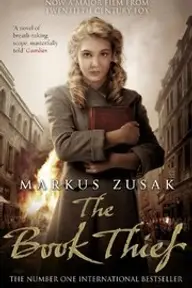
14. The Book Thief
Markus Zusak
Markus Zusak tells this story through the perspective of Death, who watches Liesel Meminger, a foster girl in Nazi Germany who steals books to learn to read with her foster father. Her family shelters a Jewish fist-fighter in their basement while bomb sirens sound across their town. Zusak uses bold formatting and Death’s direct narration to maintain tension. While written for young adults, it delivers serious emotional weight. Skip it if you dislike unconventional narrators or poetic asides. Content includes aerial bombings, street violence, antisemitism, and civilian deaths.
Find it on AmazonHow to Choose Your Next Historical Novel
Historical fiction books fall on a spectrum between wide dynastic sagas and tight, single-household dramas. If you want an expansive narrative that covers changing social rules across decades, multi-generational sagas like Pachinko and Homegoing show how historical events shape ordinary families over time. They help you understand how laws, wars, and migrations alter several generations of the same line.
If you prefer psychological tension, intimate novels like Hamnet or Alias Grace stay within a single home or town. These books focus on private domestic details, early medical care, and how everyday people understood their world. For readers who enjoy discussing these moral choices in a group, our guide to book club books offers titles selected for lively debate.
Historical Accuracy and Narrative License
Every historical novelist balances documented facts with invented dialogue. In political novels like Wolf Hall or I, Claudius, the sequence of deaths, marriages, and royal decrees matches the historical record closely, but the thoughts and private motives of the figures are entirely invented. Authors fill in the silences left behind by state records.
Other novels invent an entirely fictional cast and place them inside real historical crises. The Nightingale and All the Light We Cannot See use invented characters to represent the real experiences of ordinary citizens during World War II. When a book does not land for you, the issue is often that you wanted strict historical documentation rather than an invented character study. Readers looking for traditional literature from earlier eras may prefer our list of classic books to read.
Content Warnings and Audience Fit
Historical settings often involve severe real-world violence, class exploitation, and systemic prejudice that authors do not soften. The medieval setting of The Pillars of the Earth includes graphic physical torture and sexual assault that reflect period brutality. Wartime novels set in the twentieth century, such as Atonement and The Nightingale, contain explicit depictions of battlefield trauma, military occupation, and civilian executions.
For younger readers, The Book Thief handles the horrors of Nazi Germany through a foster child’s perspective, making it common in classrooms, but parents and teachers should still review its wartime violence. Readers looking for stories centered on female agency across history can also check our selection of good books to read for women, or take our What should I read quiz to filter books by mood.
Finding the Right Era for Your Reading Habits
If you struggle with dense political exposition, begin with twentieth-century novels before jumping into ancient Rome or Tudor England. Modern historical settings use familiar social vocabulary and faster pacing, making them easier to read over short sessions. Once you are comfortable with historical worldbuilding, earlier eras offer detailed language and distinct cultural systems.
When you finish these fourteen titles, you can expand your personal reading across other categories. Browse our broader library of Books to Read for Every Age and Moment to find historical novels, memoirs, and contemporary fiction tailored to specific life stages.