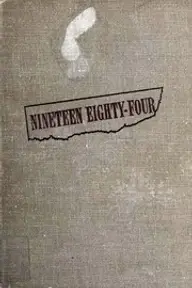
The closest books like 1984 are Kallocain, Darkness at Noon, and Brave New World. At ReadNext, we check each title against Open Library’s catalog. Karin Boye’s Kallocain shares Orwell’s vision of an all-seeing police state that outlaws private thoughts, while Arthur Koestler’s Darkness at Noon captures the cold interrogation methods and ideological surrender of a veteran party official.
We group these recommendations by the central mechanism that drives each story. The books cover three distinct angles: totalitarian regimes that manufacture objective reality, bureaucratic traps that swallow private individuals, and surveillance networks that dismantle memory and identity.
Readers who want an unyielding look at authoritarian power will find titles that match Orwell’s intensity without imitation.
Twelve Novels for Readers Who Loved 1984
Totalitarian regimes and manufactured truth
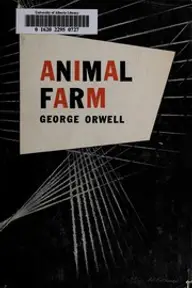
1. Animal Farm
George Orwell
George Orwell explores how revolutionary language gets twisted into autocratic propaganda. The barnyard setting provides an allegorical structure for understanding state betrayal, rewriting history, and class subjugation. The tone is leaner and sharper than 1984, trading urban dread for cold political satire. Readers seeking another dark human drama in a gritty city setting should pass, as the story functions strictly as a fable.
Find it on Amazon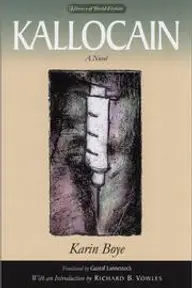
2. Kallocain
Karin Boye
Karin Boye crafts a subterranean police state where an obedient chemist invents a drug that forces subjects to reveal their hidden feelings. Like 1984, the story centers on the terror of thoughtcrime and a marriage poisoned by surveillance and suspicion. The narrative feels quiet and claustrophobic. If you want high-octane physical conflict, skip this slow psychological study of institutional loyalty.
Find it on Amazon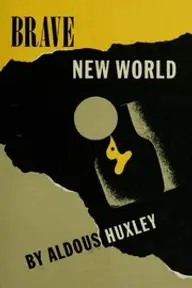
3. Brave New World
Aldous Huxley
Aldous Huxley depicts an authoritarian society maintained through mandatory pleasure, social engineering, and consumer distraction without physical brutality. The threat here is voluntary complacency and biological caste assignment. It offers a companion perspective to Orwell’s bleak austerity. Readers who demand the grim poverty and ever-present physical threat of Oceania should choose a darker political novel instead.
Find it on Amazon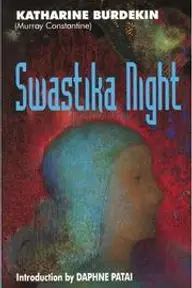
4. Swastika Night
Katharine Burdekin
Katharine Burdekin imagines a feudal European continent locked under fascist rule centuries after military victory. The plot centers on the systematic erasure of historical records, the total subjugation of women, and state-mandated worship of Hitler as a god. It matches the hopeless atmosphere of Orwell’s world. Skip this title if you cannot stomach depictions of sexual assault and institutional violence.
Find it on AmazonThe terror of bureaucratic and psychological traps
5. Darkness at Noon
Arthur Koestler
Arthur Koestler follows an imprisoned revolutionary official facing interrogation by his own authoritarian party. The novel concentrates entirely on the mental erosion and philosophical coercion that produce forced ideological confessions. It mirrors Winston Smith’s time in the Ministry of Love with intense realism. Readers looking for speculative worldbuilding will find this historical interrogation study too dry and dialogue-heavy.
Find it on Amazon
6. The Trial
Franz Kafka
Franz Kafka presents the classic nightmare of an unaccountable legal system prosecuting a senior bank officer for an unspecified crime. Josef K. wanders through bizarre courts and backrooms seeking answers that never arrive. It lacks the political science of 1984, yet it captures the precise dread of being marked guilty by an invisible authority. Skip this if you need concrete resolutions.
Find it on Amazon
7. Bend Sinister
Vladimir Nabokov
Vladimir Nabokov tracks a distinguished philosophy professor trying to maintain his intellectual independence after an average-man dictator seizes control of his country. The regime uses personal tragedy, arrest, and institutional violence to break his will. Nabokov’s prose is rich, stylized, and complex, distinct from Orwell’s stark journalism. Note that the book contains disturbing violence against a child.
Find it on Amazon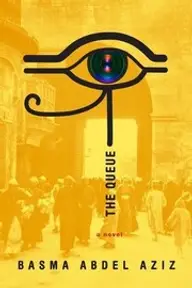
8. The Queue
Basma Abdel Aziz
Basma Abdel Aziz sets her surreal political story outside the closed gates of an authoritarian authority called the Gate. Citizens wait in an endless line to request medical permits, legal appeals, and basic permissions while state newspapers deny recent violence. It mirrors the administrative delays and manufactured reality of Oceania, though its pacing is intentionally sluggish and frustrating.
Find it on AmazonSurveillance, erased memories, and lost resistance
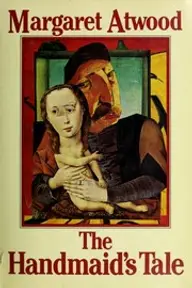
9. The Handmaid's Tale
Margaret Atwood
Margaret Atwood examines an autocracy built on religious extremism, caste control, and the total subjugation of female bodies. The heroine faces hidden microphones, state informers, and public executions while clinging to memories of her former life. It shares Orwell’s themes of state-enforced conformity and whispered resistance. The novel features state-sanctioned sexual violence and public hangings, which some readers may wish to avoid.
Find it on Amazon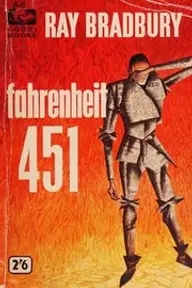
10. Fahrenheit 451
Ray Bradbury
Ray Bradbury depicts a fire department tasked with burning illegal books to keep the populace pacified and uniform. The story mirrors Orwell’s focus on the systematic destruction of language, independent thought, and historical knowledge. Bradbury’s lyrical writing and poetic cadence feel entirely different from Orwell’s bleak prose. Readers looking for gritty realism may find Bradbury’s sensory style too theatrical.
Find it on Amazon
11. The Memory Police
Yoko Ogawa
Yoko Ogawa builds an island society where the state systematically outlaws everyday items, and citizens willingly forget they ever existed. Those who retain the ability to remember are hunted down and arrested. The quiet grief and steady erosion of reality parallel the rewriting of history in Oceania. It has a fable-like stillness, making it wrong for readers who want active political revolt.
Find it on Amazon
12. A Scanner Darkly
Philip K. Dick
Philip K. Dick chronicles an undercover narcotics agent whose assignment to spy on his roommates destroys his mental stability. Constant surveillance, scramble suits, and neurological damage fracture his sense of reality until he cannot tell his true identity from his target. It trades state ideology for pharmaceutical paranoia and street-level decay, accompanied by heavy drug abuse and psychological distress.
Find it on AmazonThe Central Elements of Orwell’s Vision
George Orwell built 1984 around three specific instruments of oppression: manufactured consensus, the erasure of personal memory, and an administrative structure that turns citizens against their own senses. The political horror works because Winston Smith’s rebellion is an attempt to keep a private inner life in a room he believes has no telescreen.
Novels that succeed as read-alikes focus on at least one of these mechanisms. If you were drawn to the calculated destruction of language and historical records, Books Like Fahrenheit 451 and Books Like Animal Farm continue that examination of controlled speech. If you were shaken by the psychological breakdown inside the Ministry of Love, stories about bureaucratic traps like Darkness at Noon or The Trial will match your mood.
How to Pick Your Next Dystopian Novel
Your reaction to Orwell’s ending should dictate your next purchase. Readers who loved the cold, logical cruelty of the inner party should pick Kallocain or Darkness at Noon immediately. Both books deliver a serious study of ideological loyalty and state interrogation without easing the tension.
Readers who want to see how societal conditioning works without firing squads should select Brave New World. If you want a more personal story of resistance focused on survival and emotional endurance, Margaret Atwood’s The Handmaid’s Tale is the most natural transition.
Who Should Skip These Recommendations
Readers seeking high-fantasy escapism, triumphant rebellions, or romantic subplots should skip this catalog. None of these novels provide comforting resolutions or heroic victories over evil empires. If you want fast pacing with clear heroic arcs, explore Books Like Fourth Wing instead.
Our pick changes if you prefer optimistic science fiction where technology helps humanity overcome authoritarian oppression. In that scenario, classic political dystopias will feel suffocating and unproductive, and you should take our What Should I Read Quiz to find speculative fiction with positive outcomes.
Content and Age Guidance
These titles address adult themes including totalitarian cruelty, government surveillance, state-sanctioned murder, and psychological trauma. Parents selecting books for teenagers should evaluate specific titles carefully before assigning them.
Fahrenheit 451 and Animal Farm are standard choices for younger readers, presenting serious political critique with moderate violence. Swastika Night, The Handmaid’s Tale, and A Scanner Darkly feature explicit depictions of sexual violence or heavy drug use that are intended for mature audiences.
Where to Go After Finishing These Titles
When you finish these books, move toward Books Like Fahrenheit 451 if you want stories centered on state censorship and the destruction of literature. Turn to Books Like Animal Farm if you prefer political satire that unpacks how revolutionary ideals turn into corrupt totalitarian rule.
Explore our directory of Books Like the One You Just Finished to find companion reading across related themes, or choose one of the classic titles above to continue your search for books like 1984.