The closest matches to Andy Weir’s survival story are Project Hail Mary, We Are Legion (We Are Bob), and Delta-v. At ReadNext, we match each recommendation against Open Library’s catalog based on narrative voice, technical density, and problem-solving style.
All three hand an isolated protagonist a cascade of technical crises, a dry sense of humor, and realistic physics to work through one calculation at a time.
Readers who want sweeping space fantasy, chosen-one prophecies, or fast space-opera fleet battles will find these books frustrating. These novels reward patience with orbital telemetry, chemistry, life-support logistics, and the stubborn human will to keep breathing.
Books Like The Martian, Grouped by What Made It Work
Wry humor, grit, and improvising in deep space
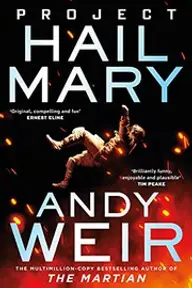
1. Project Hail Mary
Andy Weir
Andy Weir uses the same storytelling formula here that drove his debut. A lone schoolteacher-turned-scientist wakes up with amnesia aboard a starship and must run experiments to save Earth from an extinction event. The book shares the fast conversational voice, relentless lab-bench trial and error, and genuine enthusiasm for applied physics. Readers looking for gritty military conflict should skip it.
Find it on Amazon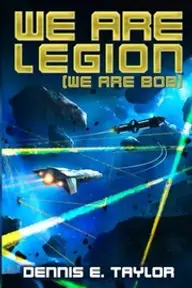
2. We Are Legion (We Are Bob)
Dennis E. Taylor
A software engineer wakes up centuries after his death as the artificial intelligence controlling an interstellar probe. Dennis E. Taylor gives his protagonist the same sarcastic, pragmatic engineering mindset that defines Mark Watney. He clones himself, designs automated manufacturing pipelines, and solves physics puzzles across deep space. Skip this if you dislike pop-culture references or multi-clone viewpoints.
Find it on Amazon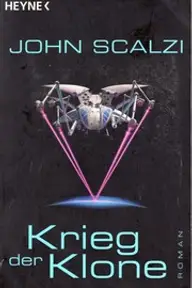
3. Old Man's War
John Scalzi
John Scalzi crafts a wry, fast-moving first-person narrative around senior citizens recruited into genetically modified bodies to fight in space. The protagonist shares Watney’s pragmatic, smart-aleck attitude while confronting unfamiliar alien technology. Note that this book contains graphic combat violence and battlefield casualties, so skip it if you prefer bloodless technical manuals.
Find it on Amazon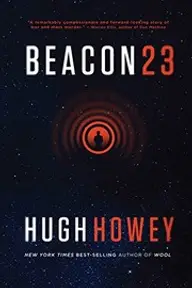
4. Beacon 23
Hugh Howey
A traumatized war veteran lives alone on a solitary navigation beacon at the edge of the galaxy. Hugh Howey captures the deep cabin fever, cynical internal monologue, and immediate terror of structural equipment failures. It trades the sunny optimism of Andy Weir for a moodier psychological edge. Readers wanting hard chemistry calculations over emotional strain can pass.
Find it on AmazonRigorous science, engineering crises, and real physics
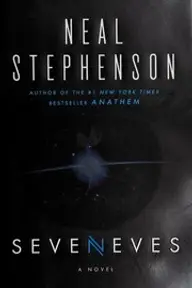
5. Seveneves
Neal Stephenson
When the moon breaks apart without warning, humanity races to build an orbital habitat to escape surface extinction. Neal Stephenson digs deep into delta-v budgets, orbital mechanics, radiation shielding, and docking maneuvers under extreme pressure. It features the same commitment to real physics as Watney’s ordeal, though on an immense civilization-level scale. Skip it if long expository chapters on tether physics test your patience.
Find it on Amazon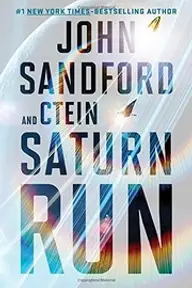
6. Saturn Run
John Sandford and Ctein
When telescopes detect an alien vessel decelerating into Saturn’s orbit, the United States and China scramble to construct competing interplanetary ships. John Sandford and Ctein focus entirely on realistic nuclear thermal propulsion, heat dissipation radiators, and the practical delays of crew communications. It reads like an authentic technical program chronicle. Those wanting fast space action without heat equations will find it slow.
Find it on Amazon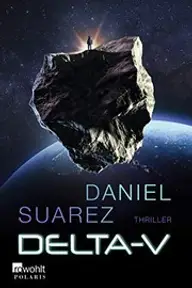
7. Delta-v
Daniel Suarez
A billionaire recruits a cave diver and a team of extreme adventurers to execute a covert commercial mining expedition to a near-Earth asteroid. Daniel Suarez relies on current aerospace technology, spinning gravity habitats, and the real physical dangers of robotic mining. The relentless equipment breakdowns and high-stakes improvisation feel immediately familiar. Skip this if financial board meetings and legal maneuvers bore you.
Find it on Amazon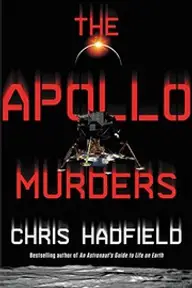
8. The Apollo Murders
Chris Hadfield
Former astronaut Chris Hadfield brings authentic spacecraft systems knowledge to an alternate-history cold war mission to the lunar surface. The novel shines when astronauts troubleshoot switches, thruster burns, and cabin pressure emergencies inside tiny Apollo modules. It matches the granular mechanical authenticity of Watney repairing his rover. Skip it if you dislike political espionage woven into spaceflight.
Find it on Amazon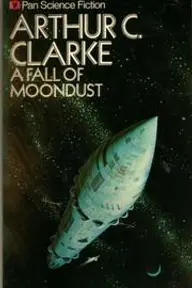
9. A Fall of Moondust
Arthur C. Clarke
A lunar cruiser sinks into a hidden sea of dry dust, burying tourists and crew beneath the surface. Arthur C. Clarke delivers a classic procedural rescue story where engineers and physicists on the surface must invent recovery equipment from scratch before air runs out. It fits readers who enjoyed the NASA mission control coordination scenes in The Martian.
Find it on AmazonPlanetary survival, colonization, and clever adaptation
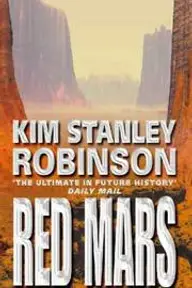
10. Red Mars
Kim Stanley Robinson
Kim Stanley Robinson provides the definitive deep dive into the practical reality of living on the fourth planet. The first hundred colonists establish habitats, build space elevators, and argue over the ethics of terraforming the setting. It offers unmatched geological and atmospheric realism, though its political debates move slowly compared to Andy Weir’s survival race.
Find it on Amazon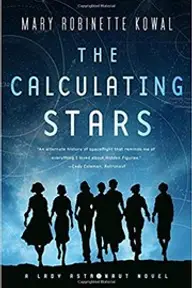
11. The Calculating Stars
Mary Robinette Kowal
A meteorite strike wipes out the US East Coast and triggers runaway climate change, accelerating the space race to establish off-world colonies. Mary Robinette Kowal centers the story on a mathematician and pilot who computes orbital trajectories by hand. The protagonist shares Watney’s reliance on slide-rule math under extreme panic. The book includes several on-page sex scenes within the lead couple’s marriage.
Find it on Amazon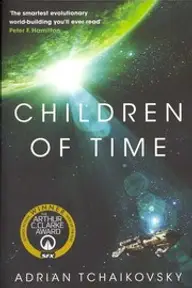
12. Children of Time
Adrian Tchaikovsky
As the last remnants of humanity flee a dead Earth in a failing ark ship, an accelerated evolutionary experiment thrives on a terraformed planet. Adrian Tchaikovsky presents brilliant ecological problem-solving and inventive biotechnology over centuries. It matches the ingenuity of Watney’s potato farm on a planetary scale. Skip this if an intense focus on sentient arachnid physiology makes you uneasy.
Find it on AmazonWhat Made The Martian Work and Which Books Match Each Trait
The Martian works for three reasons. The first is voice: a pragmatic, sarcastic narrator who responds to lethal situations with jokes and engineering tests. Project Hail Mary, We Are Legion (We Are Bob), and Old Man’s War recreate that exact tone through protagonists who refuse to panic.
The second is procedural hard science. Watney solves problems with battery watt-hours, hydrazine decomposition, and calorie arithmetic. Delta-v, Saturn Run, and The Apollo Murders deliver that same tactile satisfaction of seeing characters solve problems with physics.
The third is the harsh logistics of planetary colonization. Red Mars, The Calculating Stars, and Children of Time widen Watney’s isolated hab into broader societies learning how to adapt to unyielding, airless environments.
How to Pick by What You Loved Most
Pick Project Hail Mary first if your favorite part of The Martian was the humor, the stubborn optimism, and a single protagonist talking aloud through scientific experiments.
Choose Delta-v or Saturn Run if you preferred the engineering realism, orbital trajectories, and the feeling that every bolt and radio antenna could fail at any second. These titles offer grounded realism with no alien elements.
Select Red Mars or Seveneves if you want massive scope, structural world-building, and the heavy logistical friction of keeping humans alive in the vacuum of space for generations.
Age Fit and Content Considerations
The Martian contains frequent strong profanity, but its violence is clinical and medical, centered around survival surgery and mechanical trauma. Several read-alikes differ sharply in tone and adult content.
Old Man’s War features explicit, brutal military casualties and combat gore. The Calculating Stars includes on-page sexual content within the lead couple’s marriage. In contrast, A Fall of Moondust and Project Hail Mary keep their focus on technical teamwork without graphic violence or explicit romance.
What Would Change Our Recommendations
Our pick changes if you want a technical story completely free of speculative extraterrestrial life: Delta-v becomes the top choice. Readers who prefer pure human engineering over alien encounters will find Daniel Suarez’s asteroid-mining thriller far more grounded in contemporary aerospace physics.
Where to Head Next in Science Fiction
Readers who love clever problem-solving in different high-stakes settings should look at Books Like The Hunger Games or explore high-pressure military academies in Books Like Fourth Wing.
For lone-survivor science adventures, browse Books Like Project Hail Mary. You can also browse our main library of Books Like the One You Just Finished or take our interactive What Should I Read Quiz to find your next favorite novel.