Tiny Habits by BJ Fogg and The Power of Habit by Charles Duhigg are the two closest books like Atomic Habits. At ReadNext, we check candidate books against Open Library’s catalog so every recommended title matches an existing work. Both explore behavioral routines through plain science, showing how tiny cues and small shifts produce long-term change without relying on sheer resolve.
These twelve picks group into three areas: the science of small routines, environmental design, and psychological wiring. If you want direct tactics, start with the first group. If you already have daily habits running but feel overloaded by too many commitments, jump to the environmental titles instead.
Twelve books like Atomic Habits, grouped by focus
The science of small routines
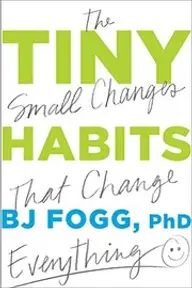
1. Tiny Habits
BJ Fogg
BJ Fogg pioneered the behavioral model that shaped modern habit design. His method anchors a tiny new behavior to an existing daily prompt, removing the need for intense motivation. Readers who loved the practical recipes in Atomic Habits will feel immediately comfortable. Skip this pick if you want cultural storytelling instead of an instructional manual.
Find it on Amazon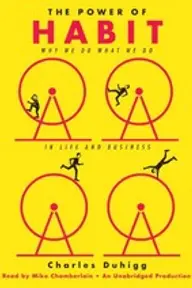
2. The Power of Habit
Charles Duhigg
Charles Duhigg explains the neurological loop of cue, routine, and reward through vivid reporting on individuals, companies, and social movements. It provides the deep narrative context behind the habit loop James Clear references. Readers wanting immediate personal checklists might find the corporate case studies broader than their daily needs.
Find it on Amazon
3. Good Habits, Bad Habits
Wendy Wood
Wendy Wood offers decades of lab research on how physical context drives repetition. Her work demonstrates that willpower rarely beats a poorly arranged room, making friction your primary behavioral lever. Anyone wanting light personal anecdotes will find Wood’s academic approach demanding.
Find it on Amazon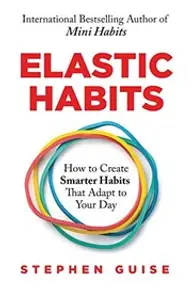
4. Elastic Habits
Stephen Guise
Stephen Guise solves the problem of rigid streaks breaking during turbulent weeks. His framework lets you choose three levels of intensity for any habit on any given day, preserving momentum when energy is low. Skip this book if you thrive on strict binary rules and inflexible daily checklists.
Find it on AmazonStructuring your time and environment
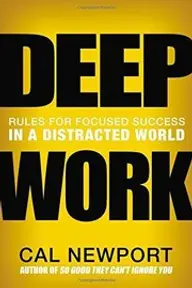
5. Deep Work
Cal Newport
Cal Newport takes the logic of environment design and applies it to professional concentration. He outlines how to strip away constant communication to make space for demanding intellectual output. Readers who work in reactive office settings with no schedule control may find Newport’s rules difficult to put in place right away.
Find it on Amazon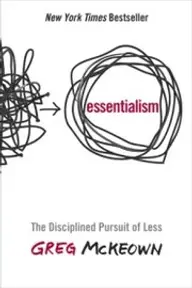
6. Essentialism
Greg McKeown
Greg McKeown addresses the trap of building efficient habits for tasks that do not matter. His focus is deliberate elimination, teaching you how to reject secondary obligations so your primary routines have room to function. This book will not appeal to readers seeking daily micro-tactics, since it operates at the level of personal priorities.
Find it on Amazon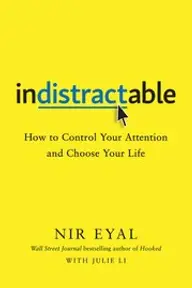
7. Indistractable
Nir Eyal
Nir Eyal unpacks the uncomfortable internal discomfort that drives people to check devices, then provides clear pacts to manage that impulse. It pairs well with James Clear’s rules on making unwanted cues invisible. Readers looking for a broad philosophical essay should look elsewhere, as Eyal delivers tactical calendar management.
Find it on Amazon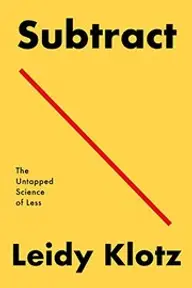
8. Subtract: The Untapped Science of Less
Leidy Klotz
Leidy Klotz reveals our innate cognitive bias toward adding new steps instead of removing obstacles. Habit building often fails because people pile on routines until they collapse under the friction. Readers wanting a traditional step-by-step self-help structure will find Klotz’s multidisciplinary research broader than expected.
Find it on Amazon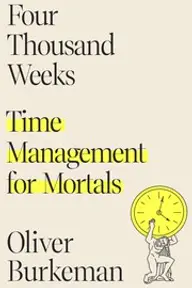
9. Four Thousand Weeks
Oliver Burkeman
Oliver Burkeman offers a sober look at human mortality and the myth of finishing every task on your list. Where habit books risk turning life into a relentless management project, Burkeman urges acceptance of real limits. Skip this pick if you are currently looking for productivity hacks or daily schedule templates.
Find it on AmazonMastering psychology and identity
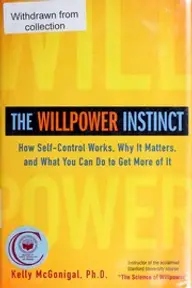
10. The Willpower Instinct
Kelly McGonigal
Kelly McGonigal translates behavioral neuroscience into realistic self-regulation strategies based on biological stress responses. She explains why self-criticism sabotages self-control, reinforcing James Clear’s ideas about identity. Readers who dislike psychological studies and biological explanations should pick an operational manual instead.
Find it on Amazon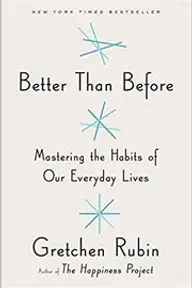
11. Better Than Before
Gretchen Rubin
Gretchen Rubin categorizes how different personality profiles respond to internal and external expectations. Her four-tendency framework helps explain why a habit rule that works for your colleague might fail completely for you. Skip this book if you dislike personality typology systems or prefer dry empirical studies.
Find it on Amazon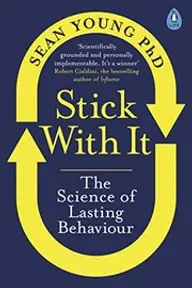
12. Stick with It
Sean Young
Sean Young presents behavioral engineering strategies derived from research on medical adherence and sustained personal changes. The book focuses on social proof, neurochemistry, and environmental scaffolding to keep routines stable. If you have already read several behavioral science titles, some examples will cover familiar academic territory.
Find it on AmazonWhat Made Atomic Habits Work
Atomic Habits succeeded by turning behavioral research into plain, sequential actions. James Clear avoided complex scientific terminology, focusing instead on practical friction, identity shifts, and cumulative gains.
The twelve picks build on those mechanisms across three areas:
- The science of small routines: Tiny Habits, The Power of Habit, Good Habits, Bad Habits, and Elastic Habits expand on the neurological loop and provide adaptable scaling methods.
- Structuring your time and environment: Deep Work, Essentialism, Indistractable, Subtract: The Untapped Science of Less, and Four Thousand Weeks focus on clearing external clutter and designing surroundings that sustain concentration.
- Mastering psychology and identity: The Willpower Instinct, Better Than Before, and Stick with It examine personality wiring and cognitive reactions to help habits survive emotional dips.
How to Pick Your Next Book
Your ideal follow-up depends on where your current daily routines are struggling. Match your primary friction point to the title built to solve it.
If you struggle to start a behavior on busy mornings, read Tiny Habits for immediate scaling techniques. If you want the sociological and neurological stories behind behavioral loops, choose The Power of Habit. If phone use and workplace distractions ruin your daily systems, pick Indistractable or Deep Work. If your calendar is overwhelmed with commitments, choose Essentialism.
Our pick changes if your main problem is mental burnout instead of poor execution. In that scenario, read Four Thousand Weeks to reassess your expectations before building new systems.
Who Should Skip These Books
These books suit people who want systematic approaches to productivity, personal routines, and behavioral design. Readers who want dramatic narrative fiction or emotional memoirs will find little interest in these titles.
If you want narrative story worlds instead of behavioral science, explore our reading lists for Books Like Fourth Wing, Books Like The Hunger Games, or Books Like The Summer I Turned Pretty. You can also try our What Should I Read Quiz to discover other genres.
Age Fit and Content Considerations
Every title among these twelve is written for general adult readers, though motivated teenagers can easily grasp the behavioral principles. The books do not contain explicit sexual content or gratuitous profanity.
Some examples touch on serious real-world topics. The Power of Habit includes a historical case where a man killed his wife in his sleep, along with discussions of severe gambling addiction and lethal hospital mistakes. The Willpower Instinct touches on substance misuse, binge eating, and chronic stress disorders.
What to Read After These Twelve
After working through behavioral systems, shifting to narrative fiction gives your mind a reset. Readers who want intense survival stakes can move to Books Like The Hunger Games. Readers drawn to fast fantasy pacing and high-energy trials will find a great fit in Books Like Fourth Wing. If you want a character-centered coming-of-age story, try Books Like The Summer I Turned Pretty.
Browse our broader collection of Books Like the One You Just Finished to discover matched recommendations across fiction, mysteries, and nonfiction titles.