Finnegans Wake, Ulysses, and Infinite Jest rank among the hardest books to read because they reject standard narrative pacing in favor of linguistic puzzles, shifting styles, and dense encyclopedic digressions. At ReadNext, we check each title against Open Library’s catalog to evaluate the mechanical barrier each book presents.
The fourteen picks fall into four distinct categories: modernist landmarks, postmodern mazes, recent formal feats, and radical avant-garde experiments. Experienced readers will find formidable literary challenges that expand how language and storytelling work.
The Hardest Books to Read, Grouped by Style
Modernist Landmarks
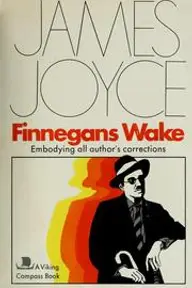
1. Finnegans Wake
James Joyce
James Joyce wrote this nocturnal text using multilingual puns, blended words, and cyclical syntax that dismantles conventional English. You read it phonetically to hear the cadence, treating the prose as music and dream logic. Bawdy humor and obscure sexual innuendo fill its passages. Skip this novel if you require a traditional plot, stable characters, or straightforward grammar, because it offers none of them.
Find it on Amazon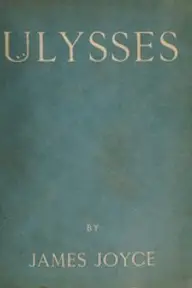
2. Ulysses
James Joyce
This novel follows Leopold Bloom through Dublin across a single day, with every chapter adopting a distinct literary style and vocabulary. The shifting voices, deep classical parodies, and unfiltered internal monologues create a dense puzzle. The text includes explicit sexual thoughts, crude bodily functions, and blasphemy. Readers who dislike wading through academic annotations or sudden parodies of historical prose styles will find it exhausting.
Find it on Amazon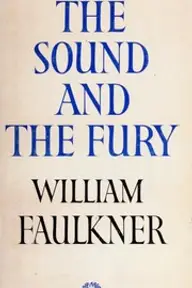
3. The Sound and the Fury
William Faulkner
William Faulkner fragments his Southern tragedy across four distinct sections, opening with an unfiltered stream of consciousness that blurs past and present without warning. Piecing together the chronology requires close attention to recurring sensory triggers and sudden changes in perspective. The book deals with incestuous obsessions, suicide, racism, and historical racial slurs. Anyone who needs clear chronological markers or standard dialogue cues should pass on this one.
Find it on Amazon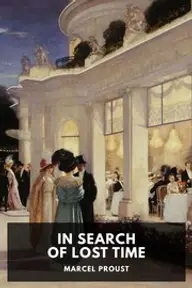
4. In Search of Lost Time
Marcel Proust
Marcel Proust constructs a multi-volume examination of memory, social habit, and art through sentences that unspool across entire pages. The difficulty lies in holding the grammatical structure of each winding clause in your mind while tracking delicate psychological shifts. The text explores themes of jealousy, social climbing, cruelty, and sexuality. It suits readers with steady patience, while readers who prefer brisk dialogue and rapid plot propulsion will struggle.
Find it on AmazonPostmodern Mazes
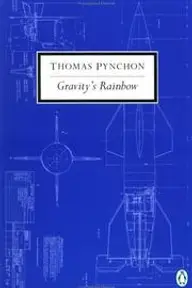
5. Gravity's Rainbow
Thomas Pynchon
Thomas Pynchon builds a maze of wartime Europe packed with rocket ballistics, paranoid conspiracies, behavioral psychology, and occult mysticism. The narrative jumps between dozens of characters and hallucinations without transitional signposts. Graphic sexual scenes, sudden violence, drug use, and bizarre bodily humor appear throughout. If you dislike technical jargon mixed with absurd musical numbers, or want a narrative that resolves neatly, choose another title.
Find it on Amazon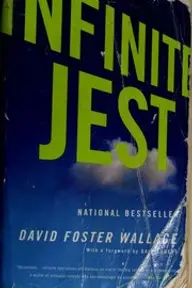
6. Infinite Jest
David Foster Wallace
Hundreds of endnotes carry real plot developments, so you read with two bookmarks while parsing technical vocabulary, tennis theory, and addiction recovery routines. David Foster Wallace crafts a sprawling near-future world exploring pleasure and entertainment. Content warnings include severe depression, suicide, substance abuse, and graphic sexual violence. Readers who get frustrated flipping back and forth to endnotes or following non-linear timelines should avoid this doorstopper.
Find it on Amazon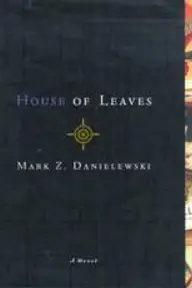
7. House of Leaves
Mark Z. Danielewski
Mark Z. Danielewski turns book design into an obstacle course, forcing you to rotate the physical volume to read upside down, mirrored, or spiraling text blocks. Multiple narrator layers collide across conflicting academic footnotes and architectural analyses of an impossible house. It contains psychological terror, claustrophobia, and explicit sexual scenes. See Books Like House of Leaves if you want similar ergodic experiments.
Find it on Amazon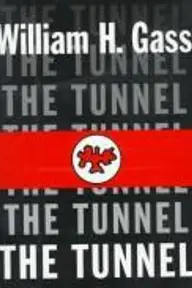
8. The Tunnel
William H. Gass
William H. Gass writes claustrophobic, rhythmically dense prose from the perspective of an academic historian who is digging a tunnel under his home to escape his life. The prose combines visual typography, poems, and brutal psychological interiority. The novel carries explicit bigotry, misanthropy, anti-Semitism, and disturbing sexual content. It is intensely unpleasant by design, so skip it if you cannot stomach a thoroughly hateful, cynical narrator.
Find it on AmazonRecent Formal Feats
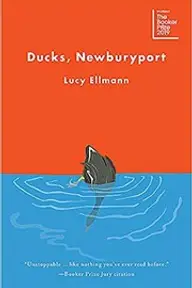
9. Ducks, Newburyport
Lucy Ellmann
Lucy Ellmann builds this massive novel almost entirely as a single continuous sentence flowing through the domestic mind of an Ohio mother baking pies. The recurring refrain of thought associations captures daily anxiety about gun violence, environmental collapse, and childhood trauma. The challenge is purely rhythmic, demanding that you surrender to the momentum. Readers who need standard paragraph breaks or clean scene transitions will bounce off immediately.
Find it on Amazon10. Septology
Jon Fosse
Jon Fosse constructs this quiet, luminous narrative without a single full stop across its seven sections. The story flows between the memories, prayers, and daily actions of an aging painter and his doppelgänger. It deals with chronic alcoholism, deep grief, depression, and spiritual doubt. The difficulty stems from the trance-like, looping repetition that forces you to read at a slow, meditative tempo.
Find it on Amazon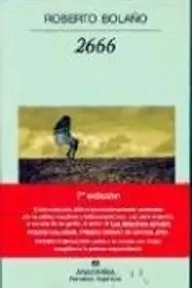
11. 2666
Roberto Bolaño
Roberto Bolaño divides this monumental work into five sections that orbit the horrific, unsolved murders of women in a fictional Mexican border town. The intellectual demands come from tracking literary critics, international mysteries, and an exhaustive, clinical catalog of real-world brutality. It features graphic descriptions of femicide, violence, and autopsies. Readers seeking emotional comfort or tidy narrative closure should look elsewhere.
Find it on AmazonRadical Avant-Garde
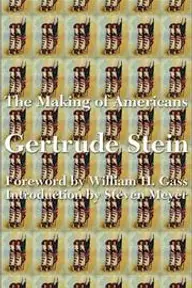
12. The Making of Americans
Gertrude Stein
Gertrude Stein strips novelistic storytelling down to extreme repetition, gradual syntactic mutation, and a relentless present tense. She attempts a complete psychological history of every human type through recursive, hypnotic sentences that circle the same descriptions hundreds of times. There is minimal plot and almost no conventional dialogue. Readers who need forward narrative drive will find it maddening, while students of modernist abstraction will appreciate the experiment.
Find it on Amazon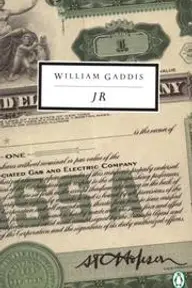
13. JR
William Gaddis
William Gaddis writes almost the entire novel in raw, unattributed dialogue, leaving you to identify who is speaking by speech quirks and context clues. The story follows an ambitious schoolboy who builds a chaotic financial empire from a school payphone. The book contains coarse language and ruthless corporate cynicism. It requires an ear for conversational rhythms, so skip it if you rely on standard attribution tags.
Find it on Amazon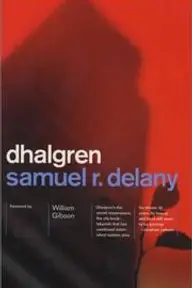
14. Dhalgren
Samuel R. Delany
Samuel R. Delany drops an amnesiac protagonist into a burning, cut-off Midwestern city where the laws of time, astronomy, and society have fractured. The narrative circles in on itself, opening and closing in the middle of sentences. It contains explicit, unconventional sexual encounters, street violence, and coarse language. Readers who prefer clean speculative worldbuilding with defined rules will find Bellona utterly baffling.
Find it on AmazonThe Four Ways a Literary Text Resists the Reader
Demanding literature tests readers through four distinct mechanical hurdles.
- Allusive density that requires reference texts to decode specialized jargon and obscure history, as in Gravity’s Rainbow, Ulysses, and Infinite Jest.
- Syntactic distortion that removes punctuation, extends sentences across pages, or scrambles grammar, seen in Ducks, Newburyport and Septology.
- Ergodic design that demands physical interaction, multiple bookmarks, or non-linear reading, found in House of Leaves.
- Moral endurance that immerses the reader in misanthropy, cruelty, or clinical violence without relief, as in The Tunnel and 2666.
How to Read a Paragraph That Will Not Parse
When a complex paragraph fails to make sense after two readings, change the physical way you process the words.
Read the stubborn section aloud at a conversational speaking speed. Hearing the cadence immediately clarifies the puns in Finnegans Wake and untangles the overlapping dialogue in JR. Your ear catches conversational rhythms and tone shifts that your eyes skip over on a printed page.
Leave the dictionary closed on your first read of a difficult chapter. Stopping to look up every fifth word destroys narrative momentum and breaks the musical flow of the prose. Mark unfamiliar terms lightly with a pencil, keep moving to absorb the overall context, and return to verify definitions only after finishing the scene.
Who Demanding Novels Are Not For
Readers looking for escapist comfort, rapid plot advancement, or clean bedtime reading should look elsewhere.
These fourteen works demand intense concentration and active participation. If you read primarily to unwind after a demanding workday, wading through the linguistic riddles of Ulysses or the misanthropic monologues of The Tunnel will produce annoyance. Readers who want high momentum and clear narrative arcs should turn to Fantasy Books for Adults or selections from Book Club Books. Younger readers needing age-appropriate literary depth will find better options among our Books for Teens.
Our pick changes if you want one demanding book with a plot: start with The Sound and the Fury instead of Finnegans Wake.
Next Steps for Tackling the Hardest Books to Read
Approaching the hardest books to read requires a practical routine.
Commit to a small daily page target instead of a timed session. Reading Finnegans Wake or The Making of Americans in short daily bursts creates steady forward momentum without producing mental exhaustion. Pairing a physical copy with an unabridged professional audiobook stabilizes shifting voices in dialogue-heavy novels like JR.
Choose one title from the category that matches your patience level, buy a clean paper copy that leaves room in the margins for notes, and read the first chapter aloud tonight.
- Pick one specific challenge: syntactic flow (Fosse), encyclopedic scale (Wallace), or puzzle typography (Danielewski).
- Set a modest daily page target to prevent reader burnout.
- Keep a dedicated notebook for character names, recurring motifs, and timeline tracking.
- If you want to assess your current reading profile, take our What Should I Read Quiz or browse Books to Read for Every Age and Moment to plan your next challenge.