The Raw Shark Texts and Piranesi are the two closest books like House of Leaves to pick up first. At ReadNext, we match books on the device that made the original work. Kehlmann’s You Should Have Left offers an immediate shorter option if you want impossible room measurements without dense academic marginalia.
House of Leaves by Mark Z. Danielewski broke traditional reading habits by combining multiple narrators, colored text, mirrored layouts, and an impossible hallway inside a Virginia home. Readers searching for books similar to House of Leaves usually want one of three specific elements: impossible indoor geography, strange visual layouts that disrupt conventional reading, or an obsessive fictional archive that unravels the sanity of whoever studies it.
The eleven books below match those specific qualities. Every title was checked against the Open Library catalog to confirm active author records and editions. They are grouped by their dominant storytelling device so you can match your next read to the exact piece of Danielewski’s novel that gripped you most.
Books Similar to House of Leaves, by Storytelling Device
Impossible architecture and shifting rooms
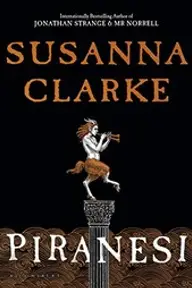
1. Piranesi
Susanna Clarke
Susanna Clarke builds an infinite labyrinth of halls lined with thousands of classical statues and enclosed ocean tides. The gentle narrator registers every tidal surge in detailed journals while slowly realizing his reality is broken. It matches the eerie spatial wonder of the five-and-a-half minute hallway, but Clarke uses a solitary, lyrical voice instead of terrifying dread. Readers who disliked the disturbing violence of Danielewski’s underworld will find this a gentler walk through endless rooms.
Find it on Amazon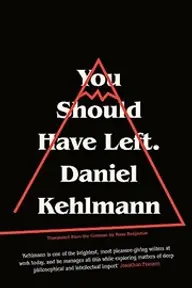
2. You Should Have Left
Daniel Kehlmann
A screenwriter rents a remote mountain house with his wife and young daughter to write a script. As he tracks his daily thoughts, he notes that the interior walls measure slightly wider than the outside foundation. The brief novella captures the creeping domestic panic of Will Navidson measuring his hallway with tape measures and string. Daniel Kehlmann relies on psychological terror instead of sprawling footnotes, making it an ideal one-sitting read.
Find it on Amazon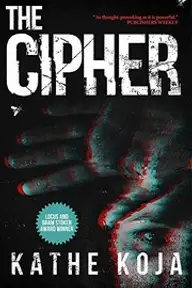
3. The Cipher
Kathe Koja
Nicholas and Nakota find an inexplicable dark opening in a storage closet inside a run-down apartment building. Objects lowered into the hole emerge mutated, and the pair develops a destructive obsession with testing its depths. Kathe Koja crafts intense psychological decay that mirrors Johnny Truant’s descent in his Los Angeles apartment. Sensitive readers should note that this novel contains graphic body horror and self-destructive behavior, so skip it if you prefer cerebral puzzles over raw horror.
Find it on AmazonErgodic formats, footnotes, and textual puzzles
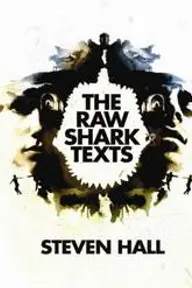
4. The Raw Shark Texts
Steven Hall
Steven Hall follows Eric Sanderson, an amnesiac hunted by a conceptual shark made of predatory ideas that swims through language. The narrative uses concrete typography, flip-book text animations, and strange visual puzzles to represent thought forms hunting the protagonist across the physical page. It provides the closest sensory match to the visual formatting experiments of Danielewski. The tone blends grief with speculative mystery, though readers wanting cold horror might find its emotional core lighter.
Find it on Amazon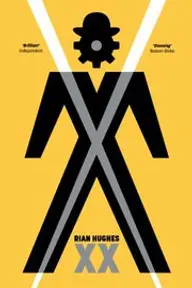
5. XX
Rian Hughes
Rian Hughes delivers a massive mystery centered on an alien transmission detected by a British radio telescope. Hughes uses his background in graphic design to construct pages using vintage computer layouts, redacted documents, concrete poetry, and magazine inserts. It mirrors the tactile reading experience of Danielewski by turning the physical codex into an interactive puzzle. Readers who get impatient with non-traditional type setting or mixed media should pass.
Find it on Amazon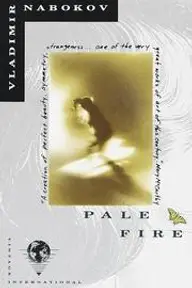
6. Pale Fire
Vladimir Nabokov
This classic shows the unhinged academic commentary later echoed in the Zampanò chapters. A long poem written by an American poet is buried beneath a sprawling foreword and hundreds of endnotes written by an increasingly deranged editor named Charles Kinbote. As Kinbote annotates each line, he hijacks the verses to narrate a deposed king’s escape from an imaginary kingdom. Readers who loved dissecting the dueling perspectives and scholarly parodies in the Navidson Record will appreciate Nabokov’s sharp wit.
Find it on AmazonObsessive archives and cosmic unraveling
7. Annihilation
Jeff VanderMeer
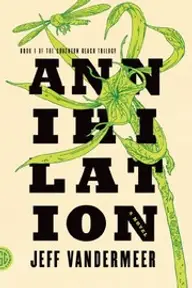
A biologist on a four-woman expedition records her descent into Area X, an abandoned coastal region where human biology and foreign environments fuse together. Her clinical field notes chart spatial distortions and a living tunnel whose walls pulse with organic script. It echoes the quiet dread of exploration and the breakdown of scientific observation seen in the Navidson expedition. Readers sensitive to unsettling biological mutations and psychological dissociation should step carefully.
Find it on Amazon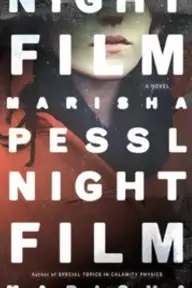
8. Night Film
Marisha Pessl
Marisha Pessl follows an investigative reporter who probes the mysterious death of Ashley Cordova, daughter of a reclusive, legendary cult horror director. The narrative embeds fictional web forum threads, autopsy clippings, diary entries, and photographs throughout the investigation. It channels the multimedia archive style of Johnny Truant digging through boxes of loose papers. The story deals with themes of suicide and sexual abuse, which may disturb sensitive readers.
Find it on Amazon
9. Ficciones
Jorge Luis Borges
Jorge Luis Borges laid the conceptual groundwork for modern labyrinthine fiction in this collection of short stories. Tales like The Library of Babel and The Garden of Forking Paths feature infinite spatial architectures, invented scholarly reviews of imaginary books, and dizzying circular realities. It delivers the theoretical core that informs Danielewski’s world without modern horror tropes. Anyone looking for visceral jumps or emotional narrative arcs will find Borges entirely cerebral.
Find it on Amazon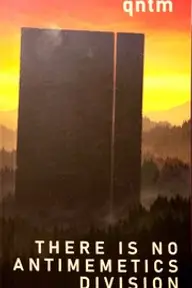
10. There Is No Antimemetics Division
qntm
qntm constructs an unsettling workplace story inside an institution that studies entities that censor themselves from human memory the instant they are seen. Characters fight nightmares they forget the moment they turn their heads, using time-stamped files and automated memos to communicate across forgotten hours. It mirrors the psychological dread of knowing an impossible danger exists while your brain actively refuses to perceive it. Contains scenes of intense psychological violence and trauma.
Find it on Amazon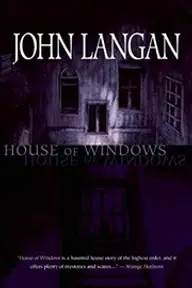
11. House of Windows
John Langan
A young widow recounts how her older professor husband vanished after his estranged son died at war, and how something began haunting their house. John Langan wraps a classic ghost story in an academic framing narrative that explores grief, guilt, and lingering resentment through intellectual digressions. It fits the domestic claustrophobia and marital strain that slowly destroyed Karen and Will Navidson during their residency. Includes discussions of domestic emotional abuse and supernatural horror.
Find it on AmazonThe Three Storytelling Devices Behind the Dread
House of Leaves succeeded because it refused to let the reader remain a passive observer. Mark Z. Danielewski forced readers to physically rotate the volume, read footnotes backwards, cross-reference fictional academic citations, and translate passages across multiple languages. That sensory engagement created genuine physical discomfort that mirrored the expanding labyrinth under the floorboards.
- Impossible architecture presents domestic spaces that violate physical geometry, as seen in Daniel Kehlmann’s You Should Have Left and Susanna Clarke’s Piranesi.
- Ergodic design forces the reader to work through typographic experiments, found in Steven Hall’s The Raw Shark Texts and Rian Hughes’s XX.
- Unreliable archives place the burden of finding truth on the reader through conflicting records, seen in Vladimir Nabokov’s Pale Fire and Marisha Pessl’s Night Film.
How to Pick Based on What Struck You First
If the five-and-a-half minute hallway was your favorite part of the book, start with Piranesi or You Should Have Left. Both novels treat impossible architectural spaces as reality, exploring how endless rooms and impossible measurements alter human sanity. Kehlmann gives you a fast horror story, while Clarke offers a vast, meditative exploration of infinite halls.
If you loved the blue text, the crossed-out paragraphs, and the footnotes that spiral across multiple pages, choose The Raw Shark Texts or XX. These titles make full use of graphic design to push beyond standard book formats. For readers who preferred Johnny Truant’s chaotic marginal notes and late-night rants, Pale Fire shows how a single deranged academic commentator can completely hijack another author’s work.
Who Should Skip These Books
Readers who want a fast, linear plot with clear answers should skip these titles. Every title demands patience, comfortable acceptance of ambiguity, and willingness to assemble meaning from incomplete pieces. If you read primarily for cozy comfort or tidy resolutions, you will find these narratives frustrating.
Our pick changes if you do not want dense psychological horror or dark themes to Piranesi, or you can take our What Should I Read Quiz to discover lighter fiction.
Exploring Other Unconventional Novels
Once you finish reading, you can explore other books by Mark Z. Danielewski, such as The Fifty Year Sword or The Familiar series, which push typographical storytelling even further. Danielewski’s broader catalog continues to experiment with full-color fonts, complex layout grids, and interconnected character perspectives.
Readers ready to branch into adjacent genres can browse our broader directory of Books Like the One You Just Finished to find psychological thrillers and speculative classics. If you want high-stakes narrative pacing without experimental formatting, explore our guides to Books Like The Secret History and Books Like The Silent Patient for propulsive character conflicts.