The closest matches to Fahrenheit 451 are Walter Tevis’s Mockingbird and Yoko Ogawa’s The Memory Police. At ReadNext, we match stories on narrative focus and emotional register, pairing readers with books that carry the same underlying anxieties as Ray Bradbury’s classic. Both novels center on the quiet, devastating loss of the written word and the lonely rebellion of individuals who refuse to stop reading. George Orwell’s 1984 shares the same dread of state-mandated erasure, though it trades Bradbury’s lyrical mourning for harsh political surveillance.
The twelve picks fall into three distinct groups: dangerous books and erased memories, numbed minds and screen addiction, and totalitarian control over thought.
Who this is not for: readers looking for fast-paced military science fiction, romantic fantasy (see Books Like Fourth Wing), or straightforward action survival tales will find these novels too contemplative. These titles prioritize social critique, philosophical dread, and psychological tension over explosive plot set pieces.
Books like Fahrenheit 451, by core theme
Dangerous books and erased memories
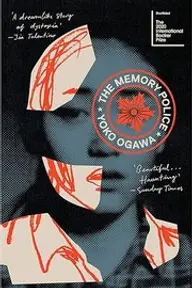
1. The Memory Police
Yoko Ogawa
On an unnamed island, objects vanish from daily life by order of the authorities, and citizens systematically forget their existence. A novelist tries to save her editor, who still remembers disappeared items like birds and ribbons. The quiet, surreal grief matches Bradbury’s mournful tone, though Ogawa’s style is spare and restrained. Readers who want rapid gunfire or rebel warfare should pass.
Find it on Amazon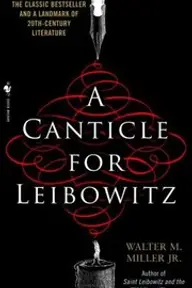
2. A Canticle for Leibowitz
Walter M. Miller Jr.
In a post-nuclear wasteland where literacy was violently purged, an order of Catholic monks spends centuries preserving surviving scraps of scientific blueprints and ancient texts. The narrative explores the cyclical folly of human civilization with dark humor and historical depth. It demands patience for Latin phrases and theological debates, so skip it if you prefer focused character-driven narratives.
Find it on Amazon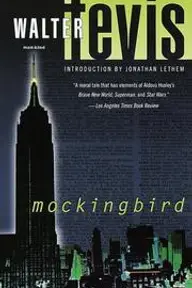
3. Mockingbird
Walter Tevis
Centuries into the future, human beings survive on tranquilizers, mindless television, and automated comfort, while no one knows how to read. An unhappy android and a man who teaches himself literacy through old silent films cross paths. It directly mirrors Montag’s slow awakening, capturing the quiet heartbreak of rediscovering written sentences in a culture that abandoned books voluntarily.
Find it on Amazon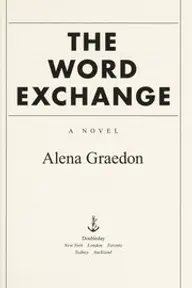
4. The Word Exchange
Alena Graedon
Smart devices called Memes predict human words before speakers can form thoughts, leading to vocabulary loss and a destructive language virus. When the head of the last print dictionary disappears, his daughter searches through an underground network of book collectors. The focus on linguistic degradation directly echoes Bradbury’s warnings, though tech thrillers with multiple subplots may frustrate purists.
Find it on Amazon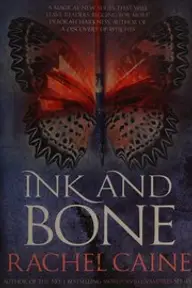
5. Ink and Bone
Rachel Caine
In an alternate history where the Great Library of Alexandria survived, personal book ownership is outlawed and the institution controls all knowledge through magical alchemy. A young smuggler enters the Library service as a spy. It delivers an accessible, high-stakes rebellion against state censorship, featuring moderate fantasy violence that suits teenage and adult readers alike.
Find it on AmazonNumbed minds and screen addiction
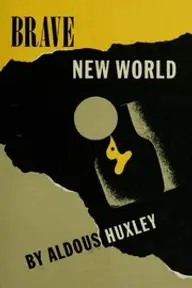
6. Brave New World
Aldous Huxley
The World State controls its population with engineered pleasure, synthetic entertainment and state-issued sedatives. Reading Shakespeare is forbidden because deep emotion disrupts social stability. It answers Bradbury’s warning that citizens would choose amusement over intellectual discomfort. Those looking for visceral physical danger will find the clinical satire quite detached.
Find it on Amazon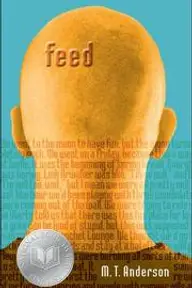
7. Feed
M.T. Anderson
Direct internet brain implants stream advertisements, pop music, and social gossip straight into the minds of suburban teenagers, causing standard literacy and critical thought to collapse completely. The narrative voice uses heavy teen slang and dark humor to depict how corporate media destroys human empathy. Readers sensitive to coarse profanity or abrasive satire should choose a different title.
Find it on Amazon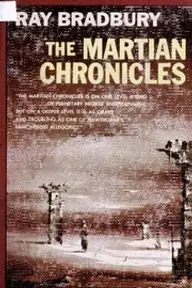
8. The Martian Chronicles
Ray Bradbury
This linked collection of stories chronicles humanity’s colonization of Mars and the subsequent destruction of native Martian civilization. Bradbury uses the same poetic, melancholy prose style found in Fahrenheit 451 to examine human loneliness, technical arrogance, and cultural ruin. Readers who insist on a single continuous protagonist across an entire novel should approach it knowing it is a mosaic.
Find it on Amazon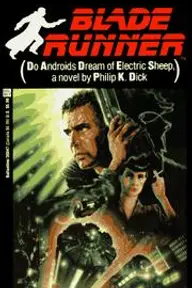
9. Do Androids Dream of Electric Sheep?
Philip K. Dick
On a fallout-coated Earth, bounty hunter Rick Deckard hunts escaped artificial humans while survivors cling to television personalities and synthetic mood boxes to simulate genuine feelings. The critique of media consumption and manufactured empathy matches Bradbury’s parlor walls, though Dick’s plot contains moderate violence and grim paranoia.
Find it on AmazonTotalitarian control and outlawed thought
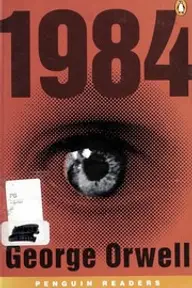
10. 1984
George Orwell
Winston Smith works at the Ministry of Truth, rewriting historical records to match shifting state propaganda, until he buys an illegal blank diary and begins writing his own thoughts. Orwell matches Bradbury’s terror of eradicated truth, replacing firemen with constant telescreen surveillance. The novel contains grim psychological abuse and torture scenes that make it far bleaker than Montag’s awakening.
Find it on Amazon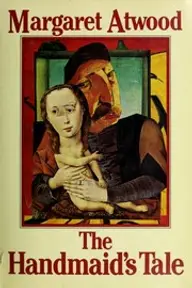
11. The Handmaid's Tale
Margaret Atwood
In the theocratic Republic of Gilead, women are forbidden from reading, writing, or owning property, while fertile handmaids are forced into reproductive servitude. Offred secretly preserves her memories through private oral testimony. The systematic outlawing of written language as a tool of oppression is central. Readers should prepare for explicit scenes of institutional sexual violence and cruelty.
Find it on Amazon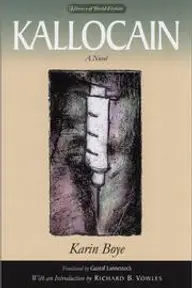
12. Kallocain
Karin Boye
A loyal state chemist invents a drug that forces subjects to confess their unspoken thoughts and hidden disloyalties, only to discover that everyone around him is quietly suffocating under state conformity. The novel explores the dread of losing your inner mental sanctuary. It offers a cool, claustrophobic psychological study instead of an action-heavy escape thriller.
Find it on AmazonWhat Made Fahrenheit 451 Resonate
Fahrenheit 451 endures because Ray Bradbury identified a specific cultural vulnerability. The government in his novel did not initially ban books by decree. The population stopped reading on its own, trading dense paragraphs for wall-sized screens, bite-sized summaries, and loud spectacles until literacy felt offensive.
Bradbury built his dystopia on three related observations: the destruction of printed records, the deliberate cultivation of shortened attention spans, and the state policing of independent thought. Each of the three groups answers one of these fears.
- Dangerous books and erased memories: novels like The Memory Police, Mockingbird, and A Canticle for Leibowitz explore the physical vulnerability of paper and the tragic fragility of collective memory.
- Numbed minds and screen addiction: Brave New World and Feed show populations surrendering their critical thinking to continuous corporate entertainment and pharmaceutical comfort.
- Totalitarian control over thought: 1984, Kallocain, and The Handmaid’s Tale examine what happens when authority figures treat private imagination as treason.
How to Pick by What You Loved Most
If Montag’s personal transformation touched you most, read Mockingbird or The Memory Police. Walter Tevis captures the exact sensation of a human being sounding out words on a printed page after living in a fog of synthetic contentment. Yoko Ogawa delivers the opposite movement: the quiet horror of watching words, objects, and concepts disappear from human memory forever.
If Mildred’s parlor walls and mechanical entertainment struck you as uncomfortably prophetic, turn to Brave New World or Feed. Huxley understood that pleasure and constant amusement can paralyze a culture faster than physical violence. Feed modernizes that insight for a digital era, showing teenage minds colonized by corporate ad feeds.
If you want the cold dread of state surveillance, pick up 1984 or Kallocain, then see Books Like 1984. Orwell tracks how language manipulation destroys objective truth, while Karin Boye shows how a state eliminates the last refuge of human individuality by demanding access to private thoughts.
Age Fit and Content Guidance
Fahrenheit 451 is standard reading in high school English classrooms, but the books that tackle similar themes vary widely in maturity level. Several of these titles deal with severe psychological pressure, physical cruelty, and sexual themes.
For early high school readers, Ink and Bone and Feed offer accessible entry points into themes of censorship and digital distraction. Rachel Caine’s Ink and Bone contains fantasy combat without explicit material. Feed addresses media addiction brilliantly, though parents should note that it contains persistent teen profanity, reckless drug use, and sexual references.
Adult readers should exercise caution with The Handmaid’s Tale and 1984. Margaret Atwood depicts ritualized sexual violence, state executions, and physical mutilation. George Orwell details prolonged physical torture and psychological dismantling in his final chapters. Both books treat totalitarian horror with absolute seriousness.
What to Read After These Twelve Books
Our pick changes if allegorical politics interest you more than future technology: start with Animal Farm (see Books Like Animal Farm). It dismantles totalitarian rhetoric in a compact, direct format.
If you discover that you prefer character-driven science fiction or interactive recommendations tailored to your mood, browse Books Like the One You Just Finished or take our What should I read quiz to pinpoint your next title.