The City of Ember and Below the Root match the quiet dread of The Giver better than any high-action survival tale. At ReadNext, we check each recommendation against Open Library’s catalog. Both drop a young protagonist into an orderly community that trades human truth for an illusion of safety, then track the moment that compromise falls apart.
The picks suit middle-grade readers, teens, and adults who want thoughtful speculative fiction. Three clear groups organize the recommendations: hidden community secrets, enforced social conformity, and the emotional burden of holding forbidden knowledge. Each blurb explains why the title fits readers who loved Jonas’s story, where the style diverges, and who should leave it on the shelf.
Books Like The Giver, Grouped by Shared Themes
Strict rules hiding dark truths
1. The City of Ember
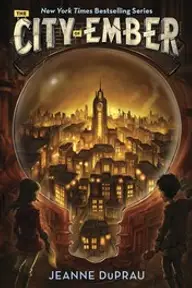
Jeanne DuPrau
Lina and Doon uncover the failing infrastructure of an underground settlement whose rulers hide how close the lights are to going out permanently. Like Jonas, they decipher historical instructions that adults around them either ignore or actively suppress. The pacing runs faster and leans toward practical problem-solving instead of philosophical memory-sharing. Readers wanting a bleak tone might find Ember slightly more optimistic, but the atmosphere of civic decay is exact.
Find it on Amazon
2. Below the Root
Zilpha Keatley Snyder
Green-clad leaders govern a treetop civilization that claims complete harmony while drugging citizens to keep negative emotion quiet. Raamo is selected by the elders for high civic training, echoing the ceremony where Jonas receives his life assignment. The conflict centers on spiritual peace bought through chemical pacification. Readers who demand fast battles will find the deliberate exploration of social manipulation slow, but the moral tension mirrors Lois Lowry closely.
Find it on Amazon
3. The Other Side of the Island
Allegra Goodman
Honor moves to an artificial, climate-controlled colony that enforces cheerful obedience and systematically alters historical memories to maintain civic order. Her parents resist quietly, forcing the girl to choose between state loyalty and personal truth. The bureaucratic doublespeak matches the sanitized terms of The Giver. Skip this book if you dislike quiet, domestic pacing, as the rebellion unfolds through small household choices and schoolroom surveillance.
Find it on Amazon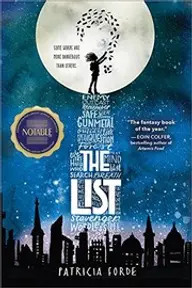
4. The List
Patricia Forde
In the city of Ark, an autocratic leader restricts the spoken language to a tiny directory of approved words to banish complex emotional rebellion. Letta works as an apprentice wordsmith, preserving the vocabulary the state attempts to discard. It mirrors the way Jonas discovers how sterile language erases real human love. Readers looking for heavy high-tech science fiction should look elsewhere, as Ark relies on medieval austerity to enforce compliance.
Find it on Amazon
Forced conformity and erased individuality

6. Uglies
Scott Westerfeld
A mandatory surgical procedure transforms adolescents into flawless beauties, removing social conflict by wiping out differences and clouding critical thought. Tally accepts the surgery as natural progress until rebels force her to see the cognitive price. The focus on biological intervention gives the story more overt sci-fi gloss than Lois Lowry’s rural simplicity. Readers who dislike romantic triangles or high-stakes chases should skip this series opener.
Find it on Amazon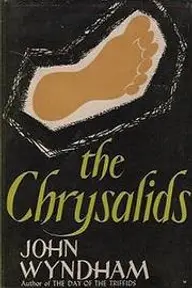
7. The Chrysalids
John Wyndham
A post-apocalyptic agrarian community ruthlessly purges any crop, animal, or child showing biological mutation from an ancient nuclear disaster. David discovers his telepathic link with a circle of peers and must hide the trait from his zealous father. The quiet dread of living under constant neighborly scrutiny will feel familiar. It carries a bleaker, adult edge, so readers sensitive to parental cruelty may find the home environment painful.
Find it on Amazon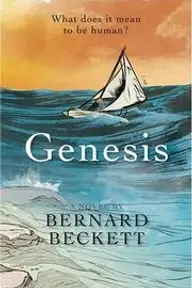
8. Genesis
Bernard Beckett
Anaximander sits before an examination panel to earn admission into the ruling academy of an isolated island utopia, narrating historical resistance movements. The entire novel is structured as a philosophical interrogation about consciousness, human cruelty, and state stability. Content includes mild violence and dark philosophical themes. Skip this title if you need active scene work, because the story exists almost entirely within a formal intellectual debate.
Find it on Amazon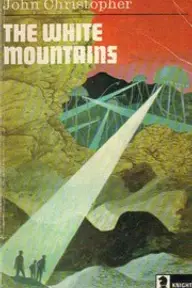
9. The White Mountains
John Christopher
Alien Tripods rule Earth through a metal mesh surgically grafted onto adolescent skulls, locking young adults into placid compliance. Will flees his English village before his capping ceremony, seeking rumored free humans in the distant mountains. The transition from childhood acceptance to terrifying adult reality mirrors the Ceremony of Twelve. The episodic wilderness trek differs from the quiet domestic drama of Jonas’s town.
Find it on Amazon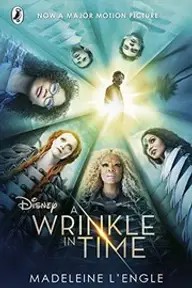
10. A Wrinkle in Time
Madeleine L'Engle
Meg Murry travels across dimensions to rescue her father, eventually encountering Camazotz, a planet under the complete mental dominion of IT. Children on Camazotz bounce balls in terrifying mechanical unison on identical suburban driveways, presenting the ultimate image of forced sameness. The story blends high fantasy and Christian allegory, which differs from Lowry’s grounded realism, but the depiction of conformity as spiritual death is identical.
Find it on AmazonQuiet stories of heavy secrets and morality

11. Tuck Everlasting
Natalie Babbitt
Winnie Foster stumbles on a family that accidentally drank from a spring granting immortality, learning the terrifying stillness of living outside the natural human cycle. Like The Giver, the story poses deep moral questions without clear villains, focusing on the weight of an unshared truth. It is a historical fable instead of a dystopian future. Readers demanding social revolution will find it too gentle and contemplative.
Find it on Amazon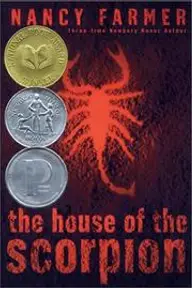
12. The House of the Scorpion
Nancy Farmer
Matt grows up in a heavily guarded mansion along the border, gradually discovering he is a clone created to provide harvest organs for an aging drug lord. The story confronts questions of bodily autonomy, human dignity, and the lies ruling elites tell to excuse cruelty. Nancy Farmer includes dark themes of human cloning and systemic exploitation. Skip if you need a short, breezy read, as the plot is expansive.
Find it on AmazonThe Narrative Mechanisms Behind Lois Lowry’s Dystopia
The Giver grips readers because it starts within the warmth of an orderly paradise before revealing the moral rot required to sustain it. Lois Lowry strips away human extremes to present a world without hunger, poverty, crime, or strife. Jonas does not begin as a rebel fighting a villainous dictator. He believes in his community, respects his parents, and trusts the elders to assign his life work.
The shift happens through observation instead of violent upheaval. When Jonas begins receiving memories from the Receiver, the absence of pain suddenly reveals the absence of joy, color, passion, and autonomy. The horror arises when polite community members smile while administering lethal injections to newborn infants because a chart says one twin weighs less.
- A peaceful surface that appears logical until its moral foundation is examined.
- Bureaucratic terms like release disguise killing, and the Stirrings pills suppress feeling.
- A young observer isolated by an assignment that grants unique perspective.
- The ethical realization that absolute security requires the complete erasure of freedom.
How to Pick by What Resonated Most
If the mystery of the community’s true origin kept you reading, start with The City of Ember or Below the Root. Both novels feature young investigators who discover that the social rules they memorized in school are lies manufactured by ancestors trying to prevent chaos. These stories emphasize the fragile mechanical and ecological systems keeping everyone alive.
If you want to explore the horror of forced uniformity, pick Uglies or The Chrysalids. These books dramatize what happens when a society views individuality, physical imperfection, or genetic variation as a danger to collective peace. Readers who loved Jonas’s internal moral awakening over external combat should pick Tuck Everlasting or Genesis, which treat ethical questions with intense focus.
Who Should Skip These Recommendations
Readers looking for continuous military battles, high-tech weapon showdowns, and explosive rebellion will find many of these books too introspective. These novels spend long chapters on domestic routines, institutional classrooms, and personal ethical dilemmas instead of arena survival. If you want fast physical action and direct armed conflict, move to Books Like The Hunger Games or explore Books Like Divergent instead.
Our pick changes if you want complex magic systems or fantasy kingdoms over moral allegory, making Books Like Harry Potter the best alternative. For detailed magical settings with mythical creatures, browse those titles or test personal preferences with our What Should I Read Quiz.
Where to Turn Next in Thoughtful Speculative Fiction
Once you finish these recommendations, Lois Lowry’s companion novels offer the most direct next step. Gathering Blue explores an impoverished village that discards the weak while exploiting artistic talent, Messenger links the separate societies together, and Son resolves the emotional arc of Jonas’s escape.
For readers ready to move into older speculative fiction examining surveillance and social conditioning, Books Like 1984 examines total state surveillance, while Books Like Fahrenheit 451 tackles the organized suppression of independent thought. Continue your search across our directory of Books Like the One You Just Finished to match specific narrative styles and emotional themes.