Read Light or The Pastel City for more Harrison, Annihilation, The Drowned World, or The Melancholy of Resistance for another catastrophe nobody explains, and Orbital or Flesh for another recent Booker winner told in a spare, unconventional way. At ReadNext, we match each title by looking at the voice, pace, and emotional register that made the original work succeed.
The End of Everything by British author M. John Harrison won the Booker Prize 2026 on Monday, 9 November 2026, at Old Billingsgate in London. The judging panel, chaired by Mary Beard, chose it unanimously from 163 considered books, awarding Harrison the £50,000 prize and making him the oldest winner in Booker history at 81.
Eight Books for Readers of The End of Everything
The 2026 Booker Winner
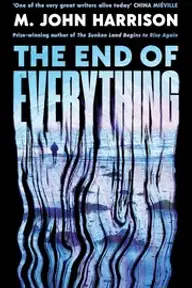
1. The End of Everything
M. John Harrison
The End of Everything by M. John Harrison follows beachcomber Phillip Tennent and his aunt Marnie along a near-future Kent coast during an invasion of shapeshifting entities called the iGhetti. At 198 pages, it uses short, filmic chapters to show societal collapse without explaining the disaster. A violent act near the beginning pushes the story into what the judges called a post-moral universe, and Marnie lives with dementia. Readers who need a tidy scientific explanation for every phenomenon should pass.
Find it on AmazonMore M. John Harrison
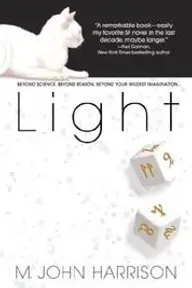
2. Light
M. John Harrison
Light connects three people across centuries through an enigmatic space anomaly called the Kefahuchi Tract. It comes from the same author as The End of Everything and moves the unexplained anomaly into space. Note that one of its three protagonists, Michael Kearney, is a serial killer. Readers who prefer quiet coastal settings to sprawling interstellar fiction should choose a different title.
Find it on Amazon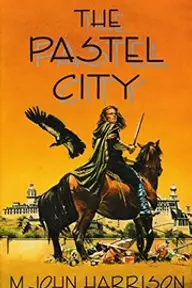
3. The Pastel City
M. John Harrison
The Pastel City introduces the decaying metropolis of Viriconium, where citizens fight with ancient technological weapons they no longer understand how to construct. It shares Harrison’s resistance to neat worldbuilding, tracking the melancholy poet Lord tegeus-Cromis through a crumbling landscape. Readers who dislike far-future fantasy tropes should look elsewhere.
Find it on AmazonCatastrophes Nobody Explains
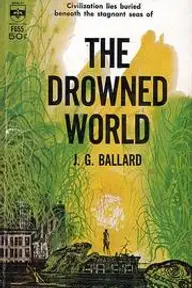
4. The Drowned World
J. G. Ballard
J. G. Ballard depicts a flooded, tropical London submerged after solar radiation melts the polar ice caps. Like Harrison’s novel, the narrative focuses on psychological surrender rather than heroic efforts to reverse the environmental shift. The protagonist feels drawn toward the altered landscape instead of fighting it. Skip this book if you demand high-tempo rescue missions or clear political resolutions.
Find it on Amazon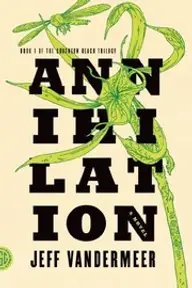
5. Annihilation
Jeff VanderMeer
Jeff VanderMeer tracks a four-woman expedition investigating Area X, a coastal zone closed to the public for three decades. It shares the coastal setting and unexplained anomaly of Harrison’s book. Previous expeditions into Area X ended in disappearances, suicides, aggressive cancers, and mental trauma. Skip this title if you want clear answers about where the anomaly originated.
Find it on Amazon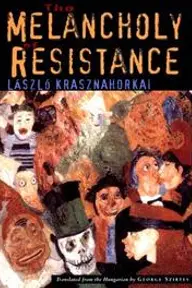
6. The Melancholy of Resistance
László Krasznahorkai
László Krasznahorkai tracks a restless provincial town thrown into apocalyptic chaos by the arrival of a circus exhibiting a stuffed whale. It mirrors the comic dread and societal unraveling of The End of Everything through long, flowing sentences. Wikipedia quotes James Wood of The New Yorker calling it a comedy of apocalypse. Readers who struggle with long, loosely punctuated sentences should skip it.
Find it on AmazonRecent Booker Winners
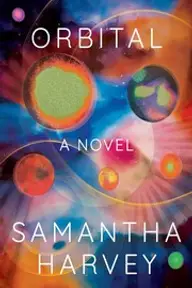
7. Orbital
Samantha Harvey
Samantha Harvey tracks six astronauts over twenty-four hours aboard the International Space Station. At 136 pages, it won the 2024 Booker Prize as a lean, meditative space pastoral. It offers another example of a short, prize-winning work that abandons standard plotting for atmospheric observation. Readers looking for threat, violence, or satire should pass.
Find it on Amazon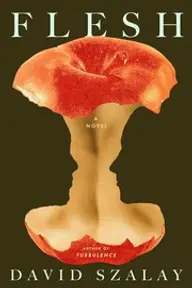
8. Flesh
David Szalay
David Szalay won the 2025 Booker Prize with this spare portrait of a Hungarian man named István moving through juvenile detention, military duty, and menial labor. Like The End of Everything, it leaves gaps, and Wikipedia notes that some critics disliked how many important events it leaves out. The story includes an illicit relationship between a fifteen-year-old and an older married woman, along with wartime violence. Readers who need dialogue-heavy storytelling will find it too bare.
Find it on AmazonIs The End of Everything Worth Reading
The End of Everything by M. John Harrison is worth reading if you appreciate lean, darkly comic literature that does not explain its mysteries. The premise centers on beachcomber Phillip Tennent and his elderly aunt Marnie as they navigate daily survival on a near-future Kent coast. Societal systems have broken down, and the world faces an influx of shapeshifting entities called the iGhetti. A violent act near the beginning plunges the characters into what the Booker judges called a post-moral universe. Phillip finds an item on the beach, described as a blob of jelly that expands, learns human speech, and begins issuing orders to its human minders.
The story is told across 198 pages in short, filmic chapters that present scenes without explaining the origins of the breakdown. In the official press release from the Booker Prize Foundation, judge chair Mary Beard described the work as the politics of now seen through the lens of the future. Beard observed that the book turns the reader upside down, raises a wry smile, and leaves a twinge of optimism despite the bleak subject matter. Harrison wrote in The Guardian, as quoted by the Booker Prize Foundation, that he conceived the story as a disaster tale where the disaster itself is the failure to comprehend. He chose to keep the iGhetti unexplained to avoid producing a standard science fiction adventure.
Reactions to the book reflect its refusal to follow traditional genre paths. Hillary Kelly in The Atlantic, quoted in the Booker Prize Foundation’s announcement, characterized the novel as brief and confounding. The Associated Press reported that critics widely praised the novel’s dark humor, though some readers felt confused by its elusive narrative. It suits readers who enjoy sharp prose, strange coastal atmospheres, and unsettling social collapse. It does not suit readers who expect tidy resolutions, scientific exposition, or conventional heroism.
Which Book to Read Next After The End of Everything
Choosing your next book depends on which quality of The End of Everything by M. John Harrison captured your attention. If you want more of Harrison’s sharp sentences, turn to his backlist. If you were fascinated by an ecological or social disaster that no authority figures explain, pick up classic and modern weird fiction. If you appreciated the short, unconventional storytelling of a major literary award winner, select one of the recent Booker Prize honorees.
| Pick | Why It Fits | Skip It If |
|---|---|---|
| Light by M. John Harrison | Same author, centered on the Kefahuchi Tract, a space-time anomaly that has ruined civilisations trying to decode it. | You want a grounded coastal setting rather than an ambitious space opera connecting three people across time. |
| The Pastel City by M. John Harrison | Explores a crumbling civilization where people use technological weapons they no longer know how to build. | You dislike far-future fantasy settings and poet-swordsman protagonists. |
| The Drowned World by J. G. Ballard | Features a submerged London where the central character accepts the tropical transformation instead of fighting it. | You want fast-paced survival action or clear political reconstruction efforts. |
| Annihilation by Jeff VanderMeer | Follows an expedition into Area X, a coastal zone closed to the public for three decades. | You need to know the origin of the environmental rupture by the final chapter. |
| The Melancholy of Resistance by László Krasznahorkai | Set in a restless town where a mysterious circus exhibiting a stuffed whale adds to an apocalyptic atmosphere. | You struggle with long, loosely punctuated sentences or a pessimistic tone. |
| Orbital by Samantha Harvey | Won the 2024 Booker Prize as a spare, 136-page study of six astronauts observing Earth over twenty-four hours. | You want conflict, satire, or alien encounters. |
| Flesh by David Szalay | Won the 2025 Booker Prize by using lean, understated prose that deliberately omits major life transitions. | You prefer rich dialogue and conventional character exposition. |
Readers who want another study of state control, manufactured truth, and surveillance rather than cosmic ambiguity should look at books like 1984. Orwell provides the concrete institutional mechanics that Harrison intentionally leaves off the page.
Where to Start With M. John Harrison’s Other Books
M. John Harrison has spent six decades producing challenging fiction across several genres. The Booker Prize Foundation says he has published thirteen novels, five short story collections and an anti-memoir, Wish I Was Here, and has worked as a literary critic. The Sunken Land Begins to Rise Again won the 2020 Goldsmiths Prize for innovation in fiction.
For readers wanting to continue with Harrison, the two primary starting points are Light and The Pastel City. Light was published in 2002, won the James Tiptree, Jr. Award and was shortlisted for the Arthur C. Clarke Award. Wikipedia notes that The Guardian ranked it number 91 on its list of the 100 Best Books of the 21st Century, and Wikipedia’s Harrison entry lists it as the first book of the Kefahuchi Tract trilogy, with Nova Swing and Empty Space. The narrative connects a physicist in 1999 with two space pilots in the year 2400, all linked by a space-time anomaly that has ruined many civilisations trying to decode it. Nova Swing earned Harrison the Arthur C. Clarke Award in 2007.
The Pastel City, published in 1971, serves as the entry gate to the Viriconium sequence. Set on a dying Earth littered with the technological remnants of forgotten cultures, it tracks Lord tegeus-Cromis through a decaying city. Harrison used Viriconium to subvert traditional epic fantasy, changing the city’s geography and history across sequels to avoid tidy maps. Harrison’s Climbers (1989) won the Boardman Tasker Prize. Choose Light if you want complex science fiction, or start with The Pastel City if you prefer inventive fantasy.
How We Matched These Books
Each recommendation on this list derives from established critical connections, literary lineage, or recent award history. In the press release issued by the Booker Prize Foundation, chief executive Gaby Wood noted that one of the judges compared The End of Everything to the work of Katherine Mansfield and J. G. Ballard. Ballard’s The Drowned World directly shares Harrison’s coastal ruin and rejection of recovery narratives.
Writing for The Hindu, as quoted in the Booker Prize announcement, Vasudevan Mukunth observed that Harrison’s path in elusive fiction is shared by László Krasznahorkai and Jeff VanderMeer. VanderMeer’s Annihilation parallels Harrison’s unexplained coastal setting, while Krasznahorkai’s The Melancholy of Resistance delivers an apocalyptic atmosphere in a restless town.
When we match a book, we look at the specific qualities that define the original reading experience: prose density, narrative ambiguity, and thematic focus. The final two picks, Orbital and Flesh, come directly from the Booker Prize winners of 2024 and 2025. David Szalay, who won the 2025 prize with Flesh, presented Harrison with the 2026 trophy at the ceremony. Both Szalay and Samantha Harvey produce spare, unconventional books that prioritize atmosphere over heavy plot. Readers who enjoy unsettling structural puzzles and architectural dread can also browse our guide to books like House of Leaves.
Who These Picks Are Not For
These recommendations are not for readers who demand clear answers about what caused a fictional disaster. The End of Everything by M. John Harrison provides no scientific briefings, governmental press conferences, or military operations to explain the iGhetti. If you read speculative fiction primarily for detailed worldbuilding rules, technological blueprints, or tidy survival storylines, these picks will frustrate you.
Readers seeking high-stakes survival thrillers or clear morality tales should pass on this list. Szalay’s Flesh leaves out important events, Krasznahorkai relies on loosely punctuated sentences, and Harvey’s Orbital observes six astronauts over twenty-four hours. If you want a fast-moving, plot-focused novel with traditional resolution, take our What Should I Read quiz to discover titles matched to concrete story arcs.
What Would Change Our Answer
Our reading paths change based on your previous reading history and your tolerance for narrative ambiguity. If you have already read M. John Harrison’s major works, skip the recommendations for Light and The Pastel City and proceed immediately to the catastrophe group featuring Ballard, VanderMeer, or Krasznahorkai. Those three authors share Harrison’s vision of environments transforming outside human comprehension.
If you disliked the ambiguity of The End of Everything and wanted more grounded storytelling, do not read The Melancholy of Resistance. Instead, choose Samantha Harvey’s Orbital, which follows six astronauts over 24 hours aboard the International Space Station. If you are selecting a novel for a reading group that needs a brief text with immediate talking points, consult our directory of short books for book clubs. The End of Everything is published in the UK by Serpent’s Tail, an imprint of Profile Books. According to the Booker Prize Foundation, it reached number eight on the Times bestseller list, and it is Serpent’s Tail’s first Booker win.
Read The End of Everything if you want a short, 198-page, darkly funny, unsettling book that refuses to explain its disaster. Delay or skip it if you need a clear plot. When you are ready for your next title, choose Light or The Pastel City for more Harrison, Annihilation or The Drowned World for unexplained environmental collapse, or Orbital for a spare award winner, and start with whichever pick matches what you liked most in The End of Everything by M. John Harrison.