Ghost, The Lightning Thief, and Holes succeed with sixth graders by pairing high-stakes conflict with protagonists who must take responsibility for their choices.
At ReadNext, we select titles by checking proposed candidates against the Open Library catalog.
These picks suit students ready for character-driven stories with clear plot motion. The fourteen books fall into four thematic groups covering school life, fantasy worlds, mystery, and historical survival. Readers who breeze through graphic novels or tackle thick chapter books will each find options that fit their current reading stamina.
Books for 6th Graders, Grouped by Theme
School, Identity & Growing Up
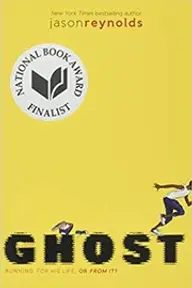
1. Ghost
Jason Reynolds
Castle Crenshaw runs track after a track coach spots his raw speed. The story moves at a sprint while exploring grief and anger. It deals with family hardship, a memory of his father shooting at him and his mother, and a brief shoplifting scene, all handled with care. Readers who want quiet plots may prefer to pass.
Find it on Amazon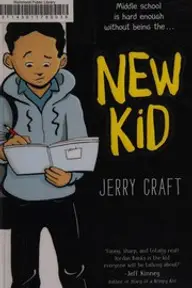
2. New Kid
Jerry Craft
Seventh-grader Jordan Banks loves drawing cartoons but his parents enroll him in an academically rigorous private school where he is one of few students of color. The full-color artwork makes dialogue pop and highlights uncomfortable microaggressions. Readers wanting prose without illustrations can bypass this one, but visual readers will devour the format.
Find it on Amazon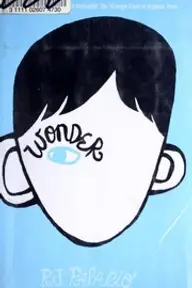
3. Wonder
R. J. Palacio
August Pullman enters a mainstream middle school for the first time after years of home schooling. The shifting narration between August, his sister, and his classmates reveals how one kid’s facial difference alters an entire social circle. It handles bullying directly. Readers who dislike sentimental endings might find the final school assembly too neat.
Find it on Amazon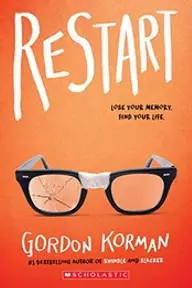
4. Restart
Gordon Korman
Chase Ambrose falls off a roof, hits his head, and wakes up with no memory of having been the middle school bully. Returning to school forces him to confront his past cruelty while deciding who he wants to be now. The multiple viewpoints keep the pacing lively. Students seeking fantasy or high adventure should skip it.
Find it on AmazonEpic Worlds & Magic
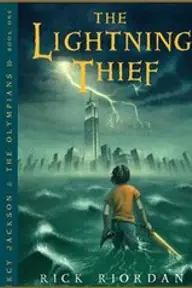
5. The Lightning Thief
Rick Riordan
Percy Jackson discovers he is the son of a Greek god right as Zeus accuses him of stealing the master lightning bolt. Modern road-trip action blends with ancient myth, setting up an irresistible quest. Mild mythological creature violence occurs throughout. Readers looking for realistic friendship dramas should pick a different title.
Find it on Amazon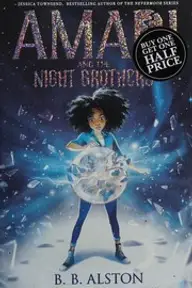
6. Amari and the Night Brothers
B. B. Alston
Amari Peters believes her missing brother is alive, which leads her to a tryout at the secret Bureau of Supernatural Affairs. Her illegal magic marks her as dangerous to the establishment. The urban fantasy setting offers high tension and brisk chapter endings. Skip this title if your reader dislikes magic tournaments and secret agent bureaucracy.
Find it on Amazon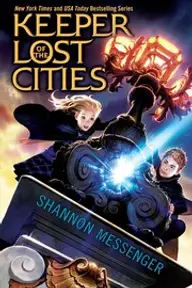
7. Keeper of the Lost Cities
Shannon Messenger
Telepathic Sophie Foster struggles to fit into the human world before discovering she is an elf and belongs in a hidden magical society. The world features magical creatures, telepathic communication, and sprawling school politics. Kidnapping danger creates real stakes. Readers who want concise, standalone stories should skip this long series starter.
Find it on Amazon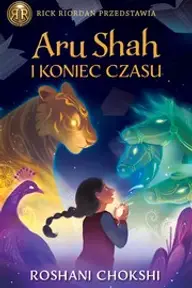
8. Aru Shah and the End of Time
Roshani Chokshi
Aru Shah lights a cursed lamp in the Museum of Ancient Indian Art on a dare, accidentally freeing an ancient demon. Her quest draws heavily on Hindu folklore with sharp comedic timing and mythological riddles. Fantasy battles carry mild peril. Readers who prefer solemn, dark mythologies might find the humor too playful.
Find it on AmazonMystery & Survival
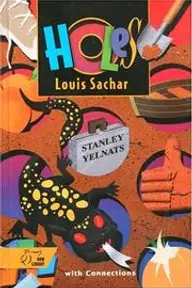
9. Holes
Louis Sachar
Stanley Yelnats receives a wrongful conviction for theft and gets sent to Camp Green Lake, a juvenile detention center where boys dig five-foot holes in the Texas dirt. Three distinct story threads converge into a tightly plotted conclusion. Harsh discipline and venomous creatures appear throughout. Readers who struggle with non-linear storytelling might find the flashbacks demanding.
Find it on Amazon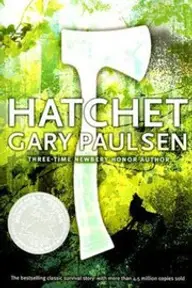
10. Hatchet
Gary Paulsen
Brian Robeson survives a small-plane crash in the Canadian wilderness with only the clothes on his back and a hatchet attached to his belt. The prose focuses on fire building, foraging, and mental endurance. Graphic injuries and animal attacks appear during Brian’s isolation. Readers seeking quick conversation and ensemble casts will find Brian’s solitude slow.
Find it on Amazon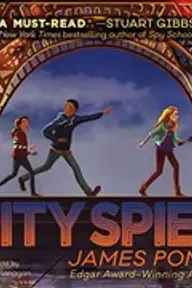
11. City Spies
James Ponti
An unorthodox secret agent recruits five skilled kids from around the world to form an undercover espionage team operating out of Scotland. Codebreaking, undercover infiltration, and tech-driven teamwork keep the plot racing. Mild weapon play and espionage danger surface in every mission. Readers who prefer realistic small-town dilemmas will find the covert spy premise far-fetched.
Find it on Amazon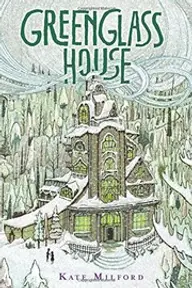
12. Greenglass House
Kate Milford
Milo Pine lives in an eccentric inn for smugglers that fills with unexpected winter guests, each concealing a secret motive. He and the cook’s daughter invent a role-playing game to investigate strange thefts around the property. The cozy, snowy atmosphere rewards patience. Readers demanding rapid chase scenes will find the layered clues leisurely.
Find it on AmazonHistorical & Thought-Provoking
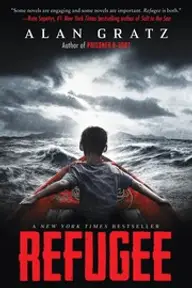
13. Refugee
Alan Gratz
Josef flees Nazi Germany, Isabel leaves Cuba, and Mahmoud escapes war-torn Syria in three alternating survival accounts. Each thread involves dangerous water crossings, family separations, and the threat of capture. The tension stays intense with realistic civilian deaths depicted. Sensitive readers or those who avoid tragic historical situations should choose gentler historical fiction.
Find it on Amazon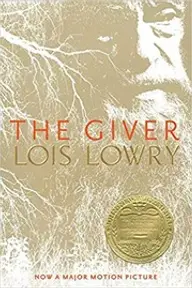
14. The Giver
Lois Lowry
Jonas lives in an orderly community without pain, color, or choice until he receives the assignment to hold the collective memories of humanity. As he absorbs true emotion, he confronts the dark compromises keeping his community stable. The story discusses euthanasia and infanticide candidly. Readers looking for light humor should skip this quiet dystopian classic.
Find it on AmazonWhat Reading Looks Like in Sixth Grade
Sixth-grade reading marks a distinct shift from decoding sentences to analyzing character motives and tracking multiple plot threads. Readers at this stage encounter unreliable narrators, multiple viewpoints, and stories where good and bad choices overlap. A book that worked well in fifth grade often feels childish now, yet adult fiction introduces themes and pacing that can overwhelm them.
Middle school schedules also compete with free reading. Sports, increased homework, and digital distractions mean books for 6th graders must capture attention within the opening chapters. If a story opens with long scenic descriptions before introducing character conflict, even strong readers will set it down in favor of quicker entertainment.
How to Choose the Best Books for 6th Graders
Use three practical tests before handing a book to your sixth grader:
- Check chapter length to confirm the book offers frequent natural stopping points for busy school nights.
- Verify emotional readiness by scanning content notes for topics like bullying, grief, or family separation.
- Match visual density by alternating between graphic novels, verse novels, and prose chapter books to prevent reading fatigue.
Who These Books Do Not Serve
These books do not suit students who are still learning to decode words or struggling with basic sentence comprehension. Those readers benefit far more from high-interest, lower-reading-level titles found in our Books for Reluctant Readers collection. Similarly, advanced readers who have already finished complex young adult trilogies and want mature social themes should look at our Books for 7th Graders list instead.
Our pick changes if a student feels completely burned out by assigned school reading. In that scenario, hand them a graphic novel like New Kid or a brisk mystery instead of a dense classic like The Giver. For broader age categories, explore Books to Read for Every Age and Moment to pinpoint the exact reading stage.
What to Do When a Book Falls Flat
Let them drop a book that has not hooked them by the end of the first few chapters. Forcing a student to finish a book they dislike turns reading into a chore and kills curiosity. When a book stalls, determine whether the problem was vocabulary difficulty, slow pacing, or an unappealing genre.
Switch formats when momentum drops. Listening to an audiobook during commutes or reading alongside your child as a shared read-aloud can carry them through complex world-building. If Brian Robeson’s solo ordeal in Hatchet feels too quiet, pivot to the international team dynamics of City Spies or take our interactive What Should I Read Quiz to discover fresh matches.
Next Steps for Growing Readers
Once a reader finishes one of these stories, steer them toward titles that share its specific appeal. Fans of intense outdoor endurance can check out Books Like Hatchet for wilderness narratives that test human ingenuity. Readers who were gripped by the moral dilemma of Jonas can explore Books Like The Giver for thoughtful speculative worlds that question authority.
If your student needs a gentler transition into middle school themes, review our recommended Books for 5th Graders to build confidence before returning to these sixth-grade selections. Keep two or three unread library books on their nightstand so the next adventure is always within reach.